


Markets React to the World Order Official Breakdown

This week, markets weren’t reacting to a single data print, macroeconomic metric, or central bank comment. They were digesting something far bigger: a major change in the world order.
Ray Dalio publicly stated that the post-World War II world order has officially broken down — a structural shift, not a cyclical one. Comments like this from someone who has spent decades studying long-term debt cycles deserve attention.
Markets don’t reprice world order overnight. But they do begin to lean. And that lean is starting to show up across gold, equities, and digital assets alike.
Ray Dalio: “The World Order Has Broken Down”
This week, Ray Dalio declared on X that the post-1945 global order has officially broken down, grounding his view in what leaders at the Munich Security Conference openly acknowledged — that the rules-based international framework of the post-World War II era no longer functions as it once did.
According to Dalio, we’ve moved into a period where might matters more than rules, great-power rivalry is intensifying across trade, technology, capital, and geopolitics, and shared norms no longer hold states together. This isn’t a short-term hiccup, he argues; it’s part of what he calls the Big Cycle — a structural phase in which established systems of order give way to a more competitive, less rule-bound world.
Dalio’s message isn’t doom for its own sake, but a structural signal: the era of unquestioned global order has ended, and markets and investors must adapt accordingly.
Traditional Markets: Gold, Silver, and Equities Feel the Pressure
Gold and silver are currently consolidating after historic rallies earlier this year. That pause, however, doesn’t negate the message those moves sent. When hard assets accelerate the way they did, it typically reflects rising concern beneath the surface — not necessarily about immediate collapse, but about structural fragility in the monetary system.
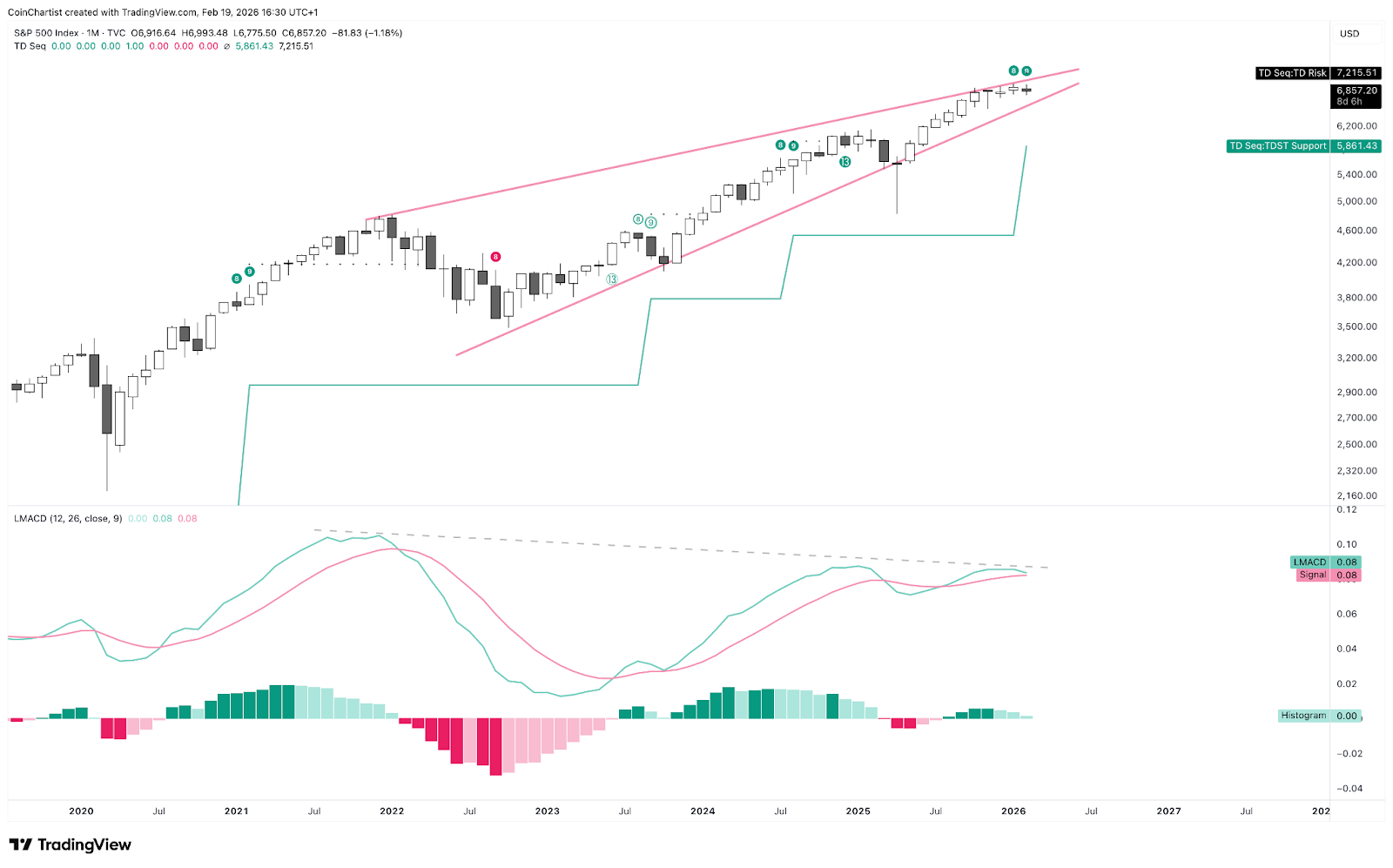
The stock market is feeling the pressure
The consolidation phase may simply be digestion. But the fact that precious metals surged so aggressively in the first place adds to the broader sentiment that something in the global financial architecture is under strain — and markets are quietly waiting to see where it reveals itself next.
Equity markets, meanwhile, remain on edge. The broader indices have held up, but participation has narrowed and volatility remains elevated relative to complacent phases of prior years. Investors are weighing the possibility that tighter financial conditions, heavier debt loads, and rising geopolitical tension could translate into tougher economic conditions ahead.
Bitcoin: Neutral Reserve Asset or Just Another Risk Trade?
Bitcoin finds itself in a unique position inside this conversation. On one hand, it still trades with liquidity cycles and broader risk appetite. On the other, its narrative as a neutral, non-sovereign reserve asset strengthens every time debt sustainability becomes part of mainstream discussion.
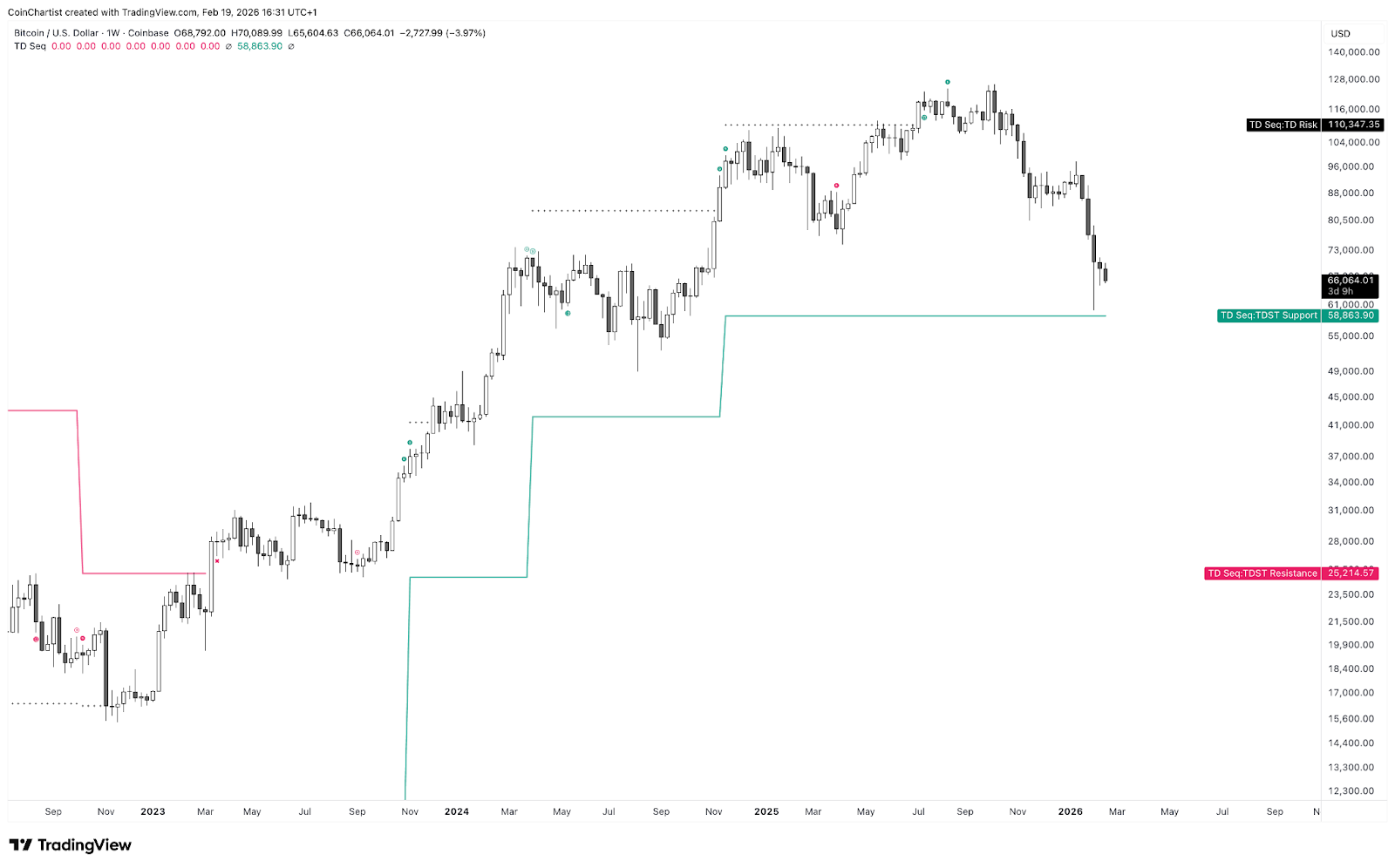
Bitcoin is consolidating after a big move down
If the global system is slowly decentralizing — from trade to settlement to capital flows — Bitcoin fits that arc structurally. However, Bitcoin’s struggle to find acceptance as a safe haven alongside gold and silver have put a dent in overall sentiment.
Price action reflects this lack of confidence and uncertainty, with Bitcoin remaining rangebound in the mid-$60,000 level.
Altcoins: Structural Risk Building Beneath the Surface
Altcoins are in a far more fragile position. While Bitcoin compresses, many major altcoins are sitting at technically critical levels. On higher timeframes, price is pressing against the lower boundary of the Ichimoku Cloud — a critical structural and a possible last line of defense.
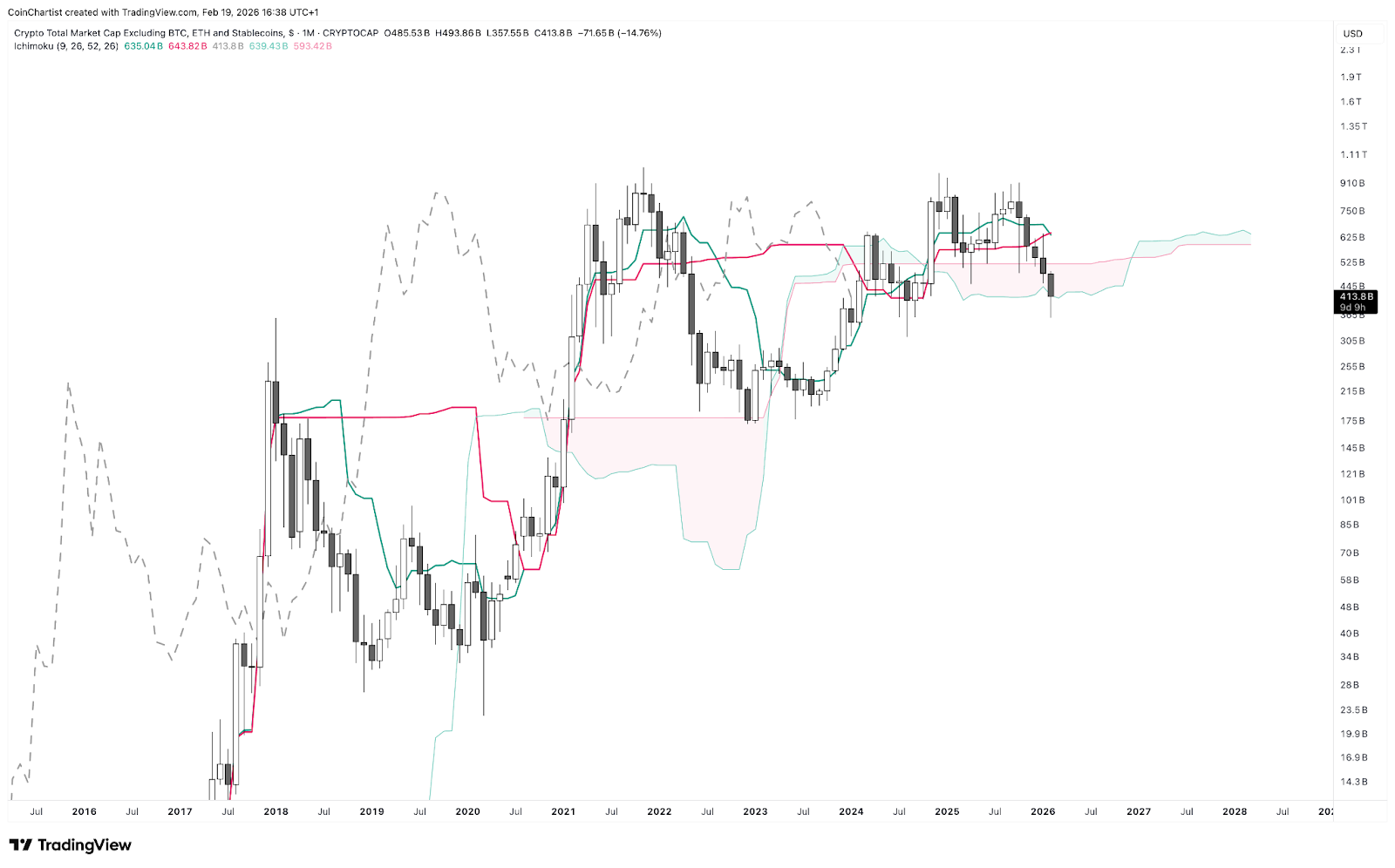
Altcoins are at serious risk of further breakdown
A decisive breakdown below the cloud would not just be another pullback. It would represent a structural trend shift. Liquidity conditions are not yet expanding. Speculative appetite remains muted. Ethereum and other large-cap Layer-1 assets continue to struggle with relative weakness versus Bitcoin. Meanwhile, higher-beta altcoins are showing signs of exhaustion rather than accumulation. This is a pivotal moment.
Either Bitcoin resolves higher and drags the complex with it — restoring risk appetite — or altcoins confirm a broader structural deterioration that suggests crypto has not yet completed its macro reset.
Poor Strategy? Saylor’s Recent Remarks Raise Concerns
In a recent interview, Michael Saylor was confronted with the fact that Bitcoin has at times fallen more than 50% and recently dipped below MicroStrategy’s average acquisition cost. The implication was clear: would the company have been better off buying gold?
Saylor appeared visibly stressed but reiterated the long-term thesis. He emphasized that MicroStrategy’s debt structure does not require refinancing unless Bitcoin were to collapse toward roughly $8,000 — a level far below current pricing. In other words, the strategy is built to withstand volatility, but does create an opportunity for deep risk exposure.
Summary
Markets spent the week digesting something far more consequential than routine economic data: the public acknowledgment that the post-World War II global order is fracturing. Ray Dalio’s declaration that the rules-based system has officially broken down reframed the macro conversation from cyclical slowdown to structural transition. Gold and silver, though currently consolidating, remain elevated after historic rallies that signaled growing concern about monetary stability. Equities are holding up, but narrowing breadth and persistent volatility suggest investors are reassessing risk in a world where debt burdens, geopolitical tension, and power rivalries are intensifying.
Within crypto, Bitcoin remains caught between identities — trading like a risk asset while aspiring to safe-haven status. Its rangebound price action near the mid-$60,000s reflects that uncertainty. Meanwhile, altcoins sit at technically fragile levels, with many pressing against critical Ichimoku support that could define the next major trend. Adding to the tension, Michael Saylor faced pointed questions about MicroStrategy’s Bitcoin strategy as price dipped below its average cost basis, highlighting both conviction and concentrated risk. Altogether, markets are not in panic — but they are leaning defensive, waiting to see how this structural shift ultimately resolves.

Suggested Posts




YouHodler is regulated in Switzerland, the EU and Argentina.

YouHodler SA
Registered financial intermediary

YouHodler Italy S.R.L.
Registered as a VASP with the OAM

YouHodler SA
Registered as VASP with Banco de España

YouHodler SA Branch in Argentina.
Registered as a VASP with the CNV.