


How to Avoid Crypto Scams: Expert Guide to Digital Asset Protection
Cryptocurrency scams have become a multi-billion-dollar industry, with victims losing over $5.6 billion to crypto-related fraud in 2023 alone—a staggering 45% increase from the previous year. As someone who's been actively investing in cryptocurrency for years, I've personally encountered sophisticated scam attempts that would have fooled even experienced investors. The irreversible nature of blockchain transactions makes cryptocurrency an attractive target for scammers—once your funds are gone, they're gone forever. Regulatory authorities worldwide have recognized this growing threat, issuing countless warnings about the prevalence of crypto fraud. My goal with this guide? To share the hard-earned lessons and red flags I've learned to recognize, so you can protect your digital assets from increasingly clever scammers.
Understanding Today's Crypto Scam Landscape
The cryptocurrency scam landscape has evolved dramatically since Bitcoin's early days. What started as obvious phishing emails has transformed into sophisticated operations involving fake exchanges, elaborate social engineering campaigns, and long-term psychological manipulation. I've watched this evolution firsthand, tracking how scammers adapt their tactics as investors become more educated.
Today's cryptocurrency scams are remarkably diverse and sophisticated. They leverage social engineering tactics that exploit human psychology—fear of missing out, desire for quick profits, trust in authority figures, and emotional vulnerabilities. Modern scammers don't just rely on technical tricks; they study behavioral psychology to craft messages that bypass our logical decision-making processes.
The numbers tell a sobering story. According to FBI data, crypto-related fraud losses have skyrocketed from $907 million in 2021 to $2.57 billion in 2022, then $5.6 billion in 2023, and exploding to $9.3 billion in 2024—more than a 10x increase in just three years. Investment fraud alone accounted for $5.8 billion in losses in 2024, a 47% jump from the previous year. What's particularly alarming is how these scams have become weaponized with artificial intelligence and deepfake technology. Scammers now routinely use AI-generated voices and images to impersonate trusted figures, making fraud detection exponentially more challenging. The FBI's 2024 report documented nearly 150,000 crypto-related complaints, with victims aged 60 and older losing $2.84 billion—a 71% increase from 2023.
Understanding the Unique Risks of Cryptocurrency Payments
Here's what makes cryptocurrency fundamentally different from your credit card: there's no customer service number to call when something goes wrong. When you send Bitcoin, Ethereum, or any other cryptocurrency, that transaction is permanently recorded on the blockchain and cannot be reversed. Period. There's no chargeback protection, no fraud department investigation, no way to dispute the charge.
I learned this lesson the hard way early in my crypto journey. I was about to send a substantial payment to what I thought was a legitimate exchange address, but something made me double-check the URL one more time. The website address had a single character different from the real exchange—a classic phishing attempt. If I'd completed that transaction, those funds would have been gone forever. Even legitimate cryptocurrency exchanges can't reverse blockchain transactions once they're confirmed.
This irreversibility is why scammers love cryptocurrency payments. Traditional payment methods offer consumer protections; cryptocurrency offers permanence. The moment you hit "send," you're trusting that the recipient is who they claim to be. This makes verification absolutely critical before any transaction.
Red Flags That Signal a Cryptocurrency Scam
After years in this space, I've developed an instinct for spotting suspicious crypto opportunities. Certain patterns almost always indicate fraud, and recognizing them has saved me—and people I've advised—substantial amounts of money.
Guaranteed returns are the biggest red flag. Any investment promising consistent, high returns with "zero risk" is lying to you. I've seen countless schemes claiming 10% monthly returns or promises to "double your Bitcoin in 30 days." Legitimate cryptocurrency investments carry risk, and anyone who tells you otherwise is running a scam.
Pressure tactics are another dead giveaway. Scammers create artificial urgency: "This offer expires in 24 hours!" or "Only 5 spots remaining!" Legitimate investment opportunities don't pressure you into immediate decisions. Whenever someone pushes me to invest quickly before I "miss out," I walk away.
Requests for cryptocurrency payments should trigger skepticism. Real businesses offer multiple payment options. If someone insists you must pay in crypto—especially if they provide a specific wallet address—that's a warning sign. Scammers prefer cryptocurrency precisely because transactions can't be reversed.
I once received a message claiming to be from a well-known crypto influencer, offering exclusive access to a new token launch. The communication style seemed off—overly enthusiastic, filled with urgency, and requesting immediate payment in Bitcoin. I checked the influencer's verified social media accounts and found warnings about impersonators. That "exclusive opportunity" was part of a widespread scam that eventually defrauded dozens of victims.
The Anatomy of Common Cryptocurrency Scams
Understanding how scams actually work is your best defense. Scammers rely on victims not understanding their tactics, which is why I want to break down exactly how these operations function. My background in content strategy has taught me to recognize manipulative messaging patterns, and cryptocurrency scams are masterclasses in psychological manipulation.

The three major categories—investment scams, phishing attacks, and romance-investment hybrids—each exploit different vulnerabilities. They all share one common foundation: social engineering tactics that manipulate emotions and bypass rational thinking. Let's examine each type so you'll recognize them immediately.
Investment Scams and Fake Exchanges
designs, convincing domain names (often just one letter different from real exchanges), and even fake customer testimonials. One particularly clever fake exchange I analyzed had copied an entire legitimate trading platform's interface, down to the market charts and trading pairs.
The difference? When you deposited cryptocurrency to this fake exchange, it went directly to scammers' wallets. The "trading" you did was completely simulated—numbers on a screen with no real blockchain transactions. When victims tried to withdraw their supposed profits, the site either requested additional fees or simply disappeared.
Here's my technique for evaluating any crypto investment platform: I check registration with financial authorities, search for independent reviews (not testimonials on their own site), verify the team's credentials on LinkedIn, and test small deposits before committing significant funds. If a platform promises returns that significantly exceed those available through established crypto lending services, that's an immediate red flag. Legitimate platforms offer realistic returns with transparent terms, not guaranteed profits.
Phishing and Social Engineering Tactics in Crypto
Phishing has become frighteningly sophisticated in the crypto space. These attacks aren't just the obvious "Nigerian prince" emails anymore. Modern crypto phishing campaigns use professional design, convincing domain names, and personalized information harvested from data breaches.
I've received phishing emails that perfectly mimicked exchange security alerts, complete with accurate logos, professional formatting, and urgent calls-to-action about "suspicious activity" on my account. The links led to fake login pages designed to steal credentials and two-factor authentication codes in real-time. These sites often use domain names like "binance-security.com" or "coinbase-verify.net"—close enough to fool someone clicking quickly through emails.
Social engineering tactics go beyond just fake websites. Scammers impersonate customer support representatives on social media, offering to help with common problems. They create fake mobile apps that appear in app stores. They even develop malicious browser extensions that modify legitimate exchange websites in real-time, changing wallet addresses when you copy-paste them.
One particularly clever attack I encountered involved a fake wallet app that generated seemingly valid seed phrases and allowed deposits. Users thought they were using a legitimate cryptocurrency wallet to secure their assets. The catch? The app was designed to steal private keys, and the scammers could access any funds deposited to these wallets.
Critical safety reminder: Always download wallet software only from official, verified sources—never from third-party app stores or websites. Check developer credentials, read independent security audits, and verify the app's authenticity before trusting it with your assets. Proper cryptocurrency wallet security practices—like using hardware wallets from verified manufacturers purchased directly from official sources and never sharing private keys—are your defense against these attacks.
Pig Butchering: The Rising Romance-Investment Scam
The "pig butchering" scam represents the intersection of romance fraud and investment scams, and it's one of the most psychologically damaging cryptocurrency scams I've encountered. The term comes from the Chinese phrase for "fattening the pig before slaughter"—scammers build trust over weeks or months before executing the fraud.
Here's the typical progression: You receive a message on a dating app or social media from an attractive person who seems genuinely interested in you. They're successful, sophisticated, and knowledgeable about cryptocurrency investing. Over time, they build a genuine-seeming relationship, sharing personal stories and creating emotional connection. Eventually, they mention their successful crypto investments and offer to teach you their strategy.
They direct you to what appears to be a legitimate trading platform—often a sophisticated fake site showing real-time price data. You start with small investments that show impressive returns. The platform displays growing account balances, and you might even successfully withdraw small amounts to build trust. Encouraged by these "profits," you invest larger sums. Your new friend might even celebrate your gains with you.
Then, when you try to withdraw significant funds, problems emerge. The platform requires additional deposits for "taxes," "verification fees," or "liquidity requirements." No matter how much you pay, you can't access your money. Eventually, you realize the entire relationship was manufactured, your new friend disappears, and the trading platform shuts down. The cryptocurrency you deposited is gone.
A colleague of mine nearly fell victim to this exact scenario. What saved them was recognizing that the supposed trading platform wasn't registered with any regulatory authority and that their "friend" consistently deflected video calls. When they researched the platform name, they found warnings from other victims. The relationship had lasted three months before they caught on.
Essential Security Practices for Crypto Investors
After years of navigating the cryptocurrency landscape, I've developed a comprehensive security system that protects my investments without making them inaccessible. Security isn't about a single solution—it's about layered defenses that protect against multiple attack vectors.
My approach combines technological solutions (hardware wallets, multi-factor authentication, secure communication channels) with behavioral practices (verification procedures, skepticism toward unsolicited opportunities, regular security audits). I've refined this system through experience, learning from both personal close calls and stories shared within the crypto community.
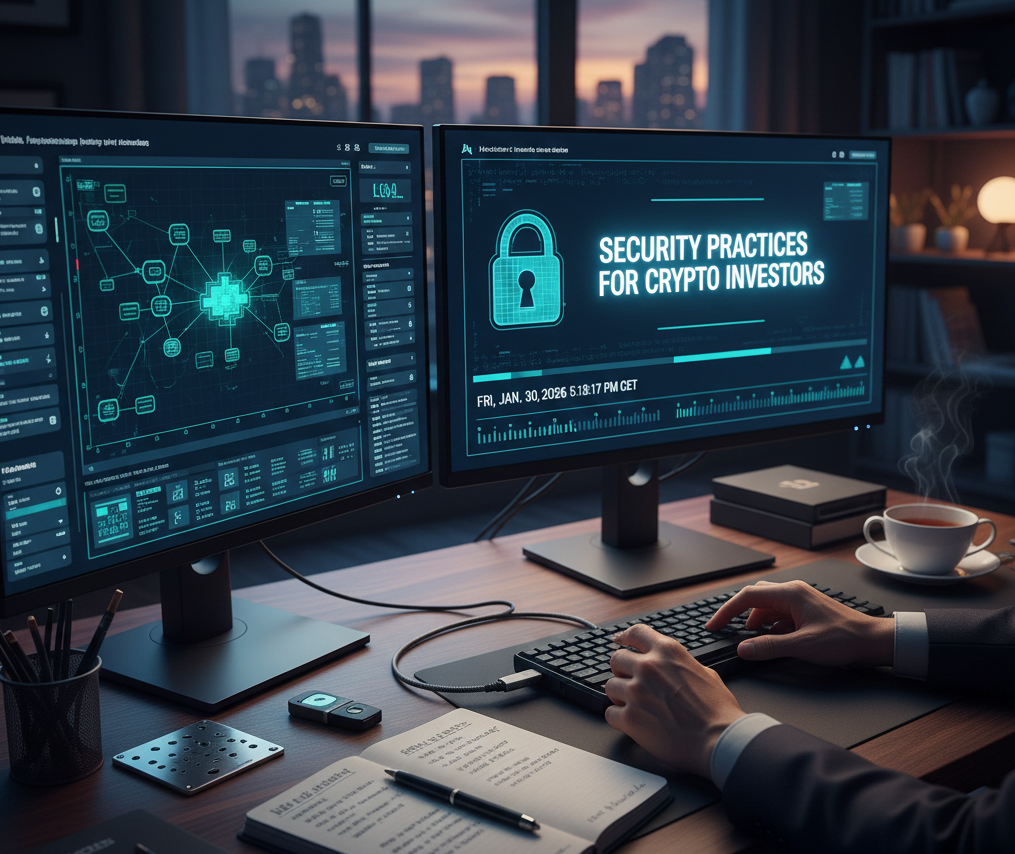
The goal isn't paranoia—it's appropriate caution proportional to the irreversible nature of cryptocurrency transactions. I only trust established services with verifiable security measures and regulatory compliance. Let me walk you through the specific practices that have kept my assets safe.
Securing Your Crypto Wallets and Private Keys
Your private keys are everything in cryptocurrency. They're the only thing proving ownership of your assets, and if someone else obtains them, they own your crypto—no appeals, no reversals, no exceptions. This makes wallet security absolutely foundational.
I use a tiered security approach based on how actively I'm using different cryptocurrency holdings. For long-term holdings that I'm not actively trading, I use hardware wallets—physical devices that store private keys offline, away from internet-connected computers. These cold storage solutions are immune to online phishing attacks and malware. I specifically use hardware wallets from established manufacturers with proven security records, purchased directly from official sources (never secondhand, never from third-party sellers who might have tampered with them).
For cryptocurrency I'm actively using—whether trading or using for transactions—I rely on hot wallets, but only on verified exchanges or wallet providers with strong security reputations. Every single one of these accounts has multi-factor authentication enabled, preferably using authentication apps rather than SMS codes (which can be intercepted through SIM-swapping attacks).
Here's my private key management system: Hardware wallets generate seed phrases (typically 12-24 words) that can recover your funds if the device is lost. I write these phrases on metal backup cards (paper deteriorates) and store them in separate secure locations—never photographed, never stored digitally, never entered into any website or app except when recovering a verified hardware wallet.
For exchange accounts where I maintain balances, I use unique, complex passwords managed through a password manager, with 2FA via authentication apps. I regularly review account activity for any suspicious transactions and set up withdrawal whitelists when available, requiring new addresses to be verified before funds can be sent.
Due Diligence: How to Verify Crypto Projects and Exchanges
Before investing in any cryptocurrency project or using any exchange, I follow a systematic verification process. This due diligence has saved me from countless scams that looked legitimate at first glance.
For cryptocurrency exchanges, I check several specific criteria. First, regulatory compliance: is the platform registered with appropriate financial authorities? Legitimate exchanges comply with regulations in their operating jurisdictions, implement Know Your Customer (KYC) procedures, and maintain transparent operations. Regulated platforms that operate in the EU and Switzerland, for example, must meet strict compliance standards that protect users. I verify this by checking regulatory databases and looking for official registration numbers.
Second, security features: Does the platform offer multi-factor authentication? Do they store the majority of customer funds in cold storage? Do they have insurance coverage for deposited assets? Are there regular security audits by reputable firms? These aren't luxuries—they're necessities for any platform holding your cryptocurrency.
Third, transparency: Legitimate platforms have clear leadership teams with verifiable credentials. I check team members on LinkedIn, looking for consistent work histories and genuine professional networks. If a platform's leadership is anonymous or uses obviously fake profiles, that's disqualifying.
For individual cryptocurrency projects, I dig into the whitepaper—the technical document explaining the project's purpose, technology, and economics. My content strategy background helps me recognize when whitepapers contain substance versus when they're just buzzword-filled marketing. I look for specific technical details, realistic timelines, and honest discussion of challenges. Scam projects often promise revolutionary technology without explaining how it actually works.
I verify partnerships and team credentials independently. If a project claims partnerships with major companies, I search for official announcements from those companies. I check whether the development team has previous successful projects or if they're unknown entities with unverifiable backgrounds. Resources like educational crypto content from established platforms can help you understand how to evaluate projects properly, though you should always conduct your own independent research.
Here's a real example: I once researched a token that claimed revolutionary blockchain scalability technology and partnerships with several Fortune 500 companies. The whitepaper was professionally designed but technically vague. When I reached out to the supposed partner companies, none had any knowledge of the project. The team's LinkedIn profiles were recently created with sparse connections. I passed on the investment, and three months later, the project was exposed as a scam that had raised millions from unsuspecting investors.
What to Do If You've Been Scammed
Despite all precautions, some people will fall victim to cryptocurrency scams. If this happens to you, immediate action can sometimes mitigate damages and helps authorities track down scammers. I've helped colleagues navigate this situation, and while recovery is unfortunately rare due to blockchain's irreversibility, certain steps are still worth taking.
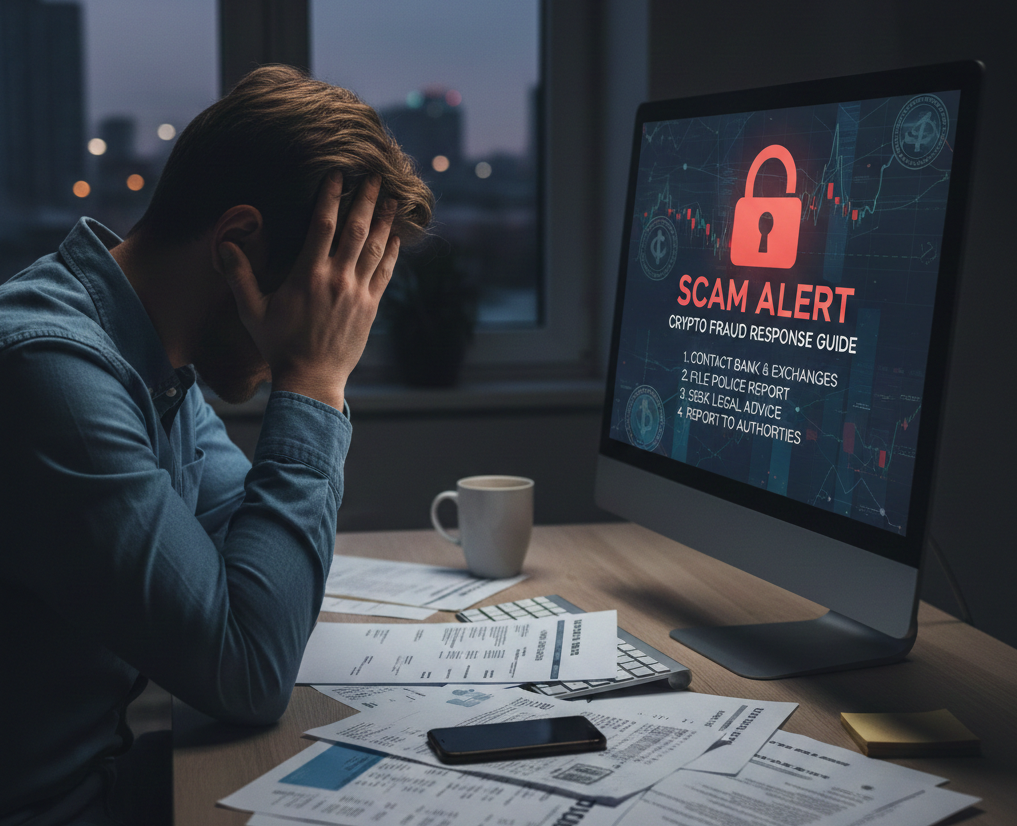
First, stop all communication with the scammer immediately. Don't send any additional funds, no matter what they promise. Scammers often try to extract more money by claiming you need to pay "taxes," "fees," or "verification deposits" to access your funds. These are lies designed to steal more cryptocurrency.
Second, document everything: save all communications, transaction records, wallet addresses, website URLs, and screenshots. This documentation serves multiple purposes—it helps you report the scam accurately, provides evidence if law enforcement investigates, and helps you identify patterns if you've shared information that could be used for identity theft.
Third, if the scam involved an account on a legitimate exchange or platform, contact their support immediately. While they can't reverse blockchain transactions, they might be able to freeze scammer accounts or provide information about where your funds were sent. They also need to know about scams impersonating their platform.
There is hope: The FBI's "Operation Level Up," launched in January 2024, has successfully saved potential victims over $359 million by identifying and notifying people who were being targeted. Between January 2024 and January 2025, the initiative contacted 5,831 victims—77% of whom had no idea they were being scammed. I once helped a colleague who had sent cryptocurrency to what they believed was a verified investment platform. We immediately documented all communications, identified the scammer's wallet addresses, and reported the incident to the FBI's Internet Crime Complaint Center. While they couldn't recover the funds (blockchain transactions are permanent), reporting helped investigators identify a pattern of similar scams and eventually track down the operators.
Official Resources for Reporting Crypto Scams
Reporting cryptocurrency scams serves multiple purposes: it creates official records for law enforcement, helps regulatory authorities identify patterns and issue warnings, and potentially prevents others from falling victim to the same scam. The FBI's Recovery Asset Team has shown remarkable success—in 2024, they froze $561 million in fraudulently obtained funds using the Financial Fraud Kill Chain process, achieving a 66% success rate.
The FBI's Internet Crime Complaint Center (IC3) at ic3.gov is the primary U.S. resource for reporting cyber crimes, including cryptocurrency fraud. They collect reports, analyze patterns, and coordinate with law enforcement agencies. While they can't recover your funds, your report contributes to investigations that might eventually lead to prosecution.
The Federal Trade Commission (FTC) at reportfraud.ftc.gov handles consumer protection complaints, including cryptocurrency investment scams. They use reports to identify trends, issue public warnings, and take legal action against fraudulent operations.
The Securities and Exchange Commission (SEC) at sec.gov/tcr investigates investment fraud, particularly involving cryptocurrency projects that might be unregistered securities. If you've been scammed by a fake ICO or fraudulent token sale, report it here.
The Commodity Futures Trading Commission (CFTC) at cftc.gov/complaint handles commodity fraud, which includes certain cryptocurrency derivatives and futures scams.
For international victims, many countries have similar agencies: the UK's Action Fraud (actionfraud.police.uk), Canada's Canadian Anti-Fraud Centre (antifraudcentre-centreantifraude.ca), and Australia's Scamwatch (scamwatch.gov.au).
From my experience and feedback within crypto communities, the FBI's IC3 tends to be most responsive for significant cryptocurrency frauds, particularly those involving organized criminal networks. The SEC actively investigates fraudulent ICOs and unregistered securities offerings. While individual fund recovery remains unlikely, these agencies do investigate patterns and have successfully prosecuted major cryptocurrency scam operations.
Additionally, report scams to the platform where you encountered them—whether a social media site, dating app, or cryptocurrency forum. This helps these platforms identify and remove scam accounts, potentially preventing others from becoming victims.
The Future of Crypto Security: Staying One Step Ahead
Cryptocurrency scams will continue evolving as blockchain technology advances and security measures improve. I've observed how scammers adapt to every new defensive technology—when exchanges implemented better security, scammers shifted to social engineering; when investors learned about pump-and-dump schemes, scammers developed pig butchering operations.
Looking ahead, I anticipate several trends. Artificial intelligence has already made phishing attempts dramatically more sophisticated, with scammers using AI to create convincing fake videos and voice messages impersonating trusted figures. Deepfake technology now enables video calls that appear to show real people—we're already seeing this in pig butchering scams, making them exponentially harder to detect. In 2024, pig butchering scam revenues grew 40% year-over-year as operators professionalized their operations and expanded globally beyond Southeast Asia. Smart contract vulnerabilities will remain targets as DeFi platforms grow.
On the defensive side, cryptocurrency wallet security continues advancing with biometric authentication, multisignature requirements, and decentralized identity verification. Regulatory authorities worldwide are developing more comprehensive frameworks for cryptocurrency oversight, though jurisdiction challenges remain significant given blockchain's borderless nature.
My approach to staying ahead involves continuous education—following security researchers, participating in cryptocurrency communities, and learning about emerging threats. I regularly review and update my security practices as new vulnerabilities are discovered and new protective technologies become available. I recommend following reputable cryptocurrency security researchers on social media, subscribing to security newsletters from established exchanges, and participating in crypto education communities.
The fundamental principles remain constant: verify before you trust, protect your private keys, use established platforms, and maintain healthy skepticism toward too-good-to-be-true opportunities. Whether you're trading, accessing liquidity from your holdings, or exchanging between different cryptocurrencies, always prioritize platforms with proven security records and regulatory compliance.
The cryptocurrency landscape offers tremendous opportunities, but it also requires personal responsibility for security that traditional finance doesn't demand. By understanding how scams work and implementing comprehensive security practices, you can participate in this ecosystem while protecting your assets from increasingly sophisticated threats.
Frequently Asked Questions
How do you spot a cryptocurrency scammer?
Cryptocurrency scammers typically exhibit specific red flags: guaranteed high returns with no risk, pressure to invest immediately, requests for payments exclusively in cryptocurrency, and reluctance to provide verifiable information about their operation. They often impersonate legitimate exchanges, create fake investment platforms, or use romance tactics to build trust. Always verify claims independently, research platforms thoroughly, and trust your instincts when something feels off.
What are the biggest red flags for crypto investment scams?
The biggest red flags include promises of guaranteed returns or profits with zero risk, aggressive pressure to invest quickly before "missing out," requests to pay exclusively in cryptocurrency, reluctance to provide verifiable company information, and inconsistencies in communication or documentation. Scam operations often use fake testimonials, manipulated price charts, and celebrity endorsements. Legitimate investments acknowledge risks and allow time for due diligence.
How can I verify if a crypto exchange is legitimate?
Verify cryptocurrency exchanges by checking regulatory registration with financial authorities, researching independent reviews from reputable sources, confirming the leadership team has verifiable credentials on LinkedIn, testing with small deposits initially, and ensuring strong security features like multi-factor authentication and cold storage. Legitimate exchanges implement KYC procedures, maintain transparent operations, and have clear customer support channels with documented histories.
What should I do immediately if I've been scammed in a crypto transaction?
Immediately stop all communication with the scammer and refuse any additional payment requests for "fees" or "taxes." Document everything comprehensively: communications, transaction records, wallet addresses, and screenshots. Report to the FBI's Internet Crime Complaint Center (IC3) at ic3.gov immediately—timing matters, as the FBI's Recovery Asset Team froze $561 million in fraudulent funds in 2024 through rapid intervention. Contact legitimate platforms involved and your local FBI field office. The FBI's Operation Level Up has saved victims over $359 million through early identification and notification.
How can I secure my crypto wallet against hackers?
Secure your crypto wallet by using hardware wallets for long-term holdings, enabling multi-factor authentication on all accounts, never sharing private keys or seed phrases, storing seed phrase backups on metal cards in separate secure locations, using strong unique passwords through a password manager, and only downloading wallet software from official verified sources. Implement withdrawal whitelists when available and regularly audit account activity for suspicious transactions.
What is a pig butchering scam in cryptocurrency?
Pig butchering scams combine romance fraud with investment fraud, where scammers build relationships over weeks or months through dating apps or social media, gradually introducing cryptocurrency investment opportunities. They direct victims to fake trading platforms showing false profits, encouraging increasingly large deposits. When victims attempt significant withdrawals, scammers request additional fees or simply disappear. The term refers to "fattening the pig before slaughter."
Can scammers steal my crypto through social engineering?
Yes, social engineering represents one of the most effective methods for crypto theft. Scammers manipulate victims into revealing private keys, seed phrases, or login credentials through phishing emails, fake customer support interactions, impersonation of trusted figures, or emotional manipulation. They exploit psychological vulnerabilities like fear, greed, urgency, or trust. Strong security practices and skepticism toward unsolicited communications are essential defenses against social engineering attacks.
Which government agencies should I report crypto scams to?
Report cryptocurrency scams to the FBI's Internet Crime Complaint Center (IC3) at ic3.gov for cybercrime reporting, the Federal Trade Commission (FTC) at reportfraud.ftc.gov for consumer protection, the Securities and Exchange Commission (SEC) at sec.gov/tcr for investment fraud, and the Commodity Futures Trading Commission (CFTC) at cftc.gov/complaint for commodity fraud. International victims should report to their country's equivalent fraud reporting agencies.
Are hardware wallets completely safe from crypto scams?
Hardware wallets provide excellent security against online attacks by storing private keys offline, but they're not completely foolproof. Users can still fall victim to phishing attacks that trick them into approving malicious transactions, purchasing tampered devices from unauthorized sellers, or losing seed phrases through poor backup practices. Hardware wallets protect against remote hacking but require proper usage, secure seed phrase storage, and vigilance against social engineering attempts.

Suggested Posts



YouHodler is regulated in Switzerland, the EU and Argentina.

YouHodler SA
Registered financial intermediary

YouHodler Italy S.R.L.
Registered as a VASP with the OAM

YouHodler SA
Registered as VASP with Banco de España

YouHodler SA Branch in Argentina.
Registered as a VASP with the CNV.