


QT Is Dead - But the Carry Trade Isn’t Done With Crypto
.jpg)
After several weeks of tightening financial conditions, the past seven days delivered a rare convergence of global macro shocks: a surprise hawkish turn from the Bank of Japan, the official end of U.S. quantitative tightening, and growing political uncertainty around future Federal Reserve leadership. Crypto didn’t stand a chance — leverage was flushed, correlations spiked, and Bitcoin briefly retested November’s lows.
Yet beneath the chaos, a familiar pattern is emerging: macro is firmly back in control. Let’s break down the forces shaping the market right now.
Bank of Japan Unwinds Carry Trade
The surprise hawkish shift from the Bank of Japan triggered a global repricing in bonds last week as markets suddenly realized Japan may be exiting its decades-long regime of zero rates, suppressed yields, and abundant liquidity. Rising Japanese yields forced domestic investors to unwind foreign positions, pushing U.S. Treasury yields higher and sparking cross-asset volatility.
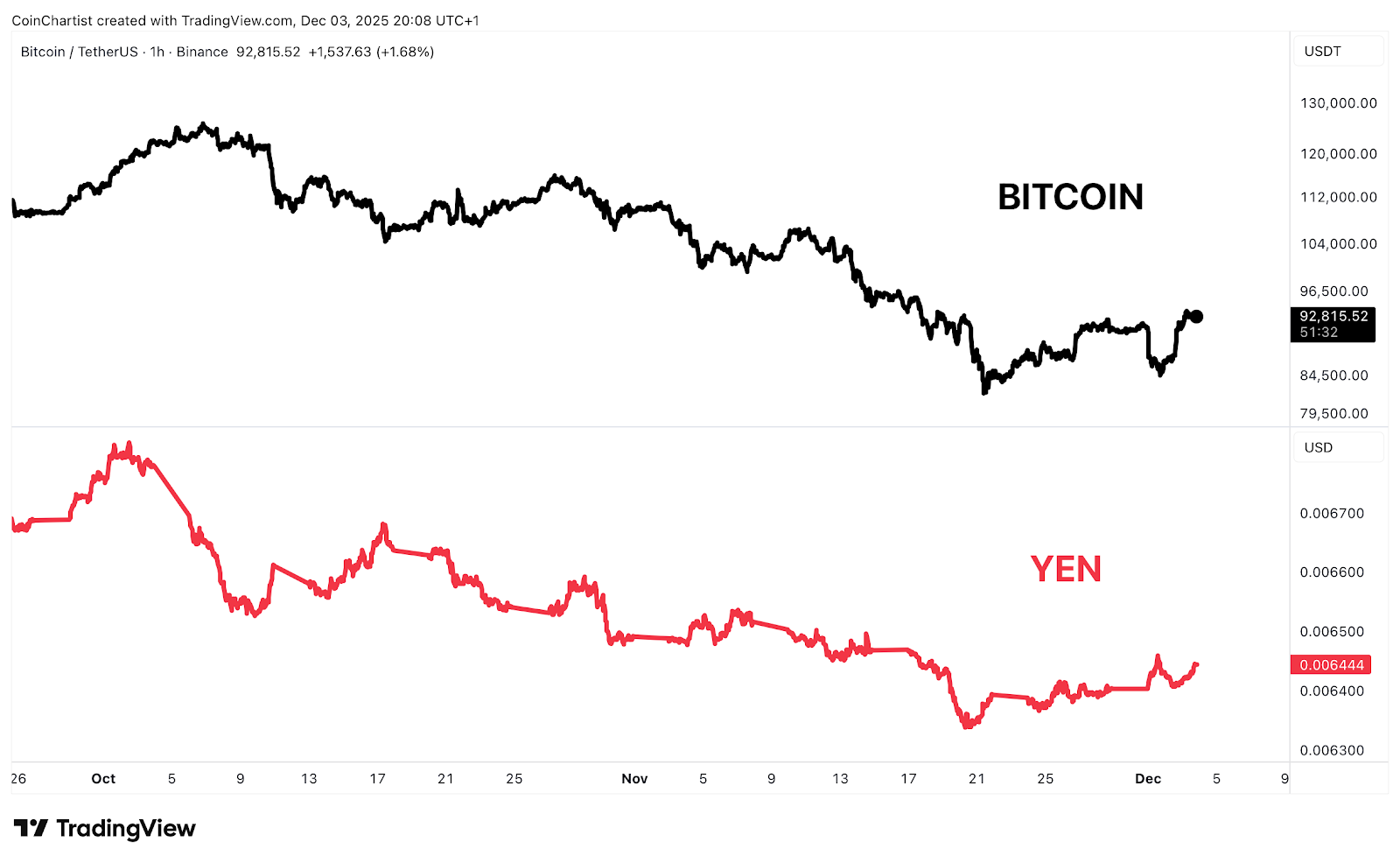
BTCUSD (top) versus JPYUSD (bottom)
The yen carry trade — a major source of global leverage — began to unwind, contributing to the risk-off move that accelerated the crypto liquidation cascade. Markets are now watching to see whether the BoJ follows through with further tightening, as Japan’s policy shift has become a major macro risk factor. Bitcoin itself is trading almost tick-for-tick with the Japanese yen, highlighting how sensitive crypto assets are to carry-trade dynamics.
Dead Cat Bounce or A Bullish Reversal?
In total, Bitcoin saw an 18% decline during the month of November, then immediately kicked off December with a return to the low-to-mid $80K range. After flushing leveraged long positions, the market reversed with the strongest bullish daily candlestick since May, bringing pain to short positions next. Altcoins took a beating alongside Bitcoin, but to little surprise have since regained more steam in the crypto market-wide bounce.
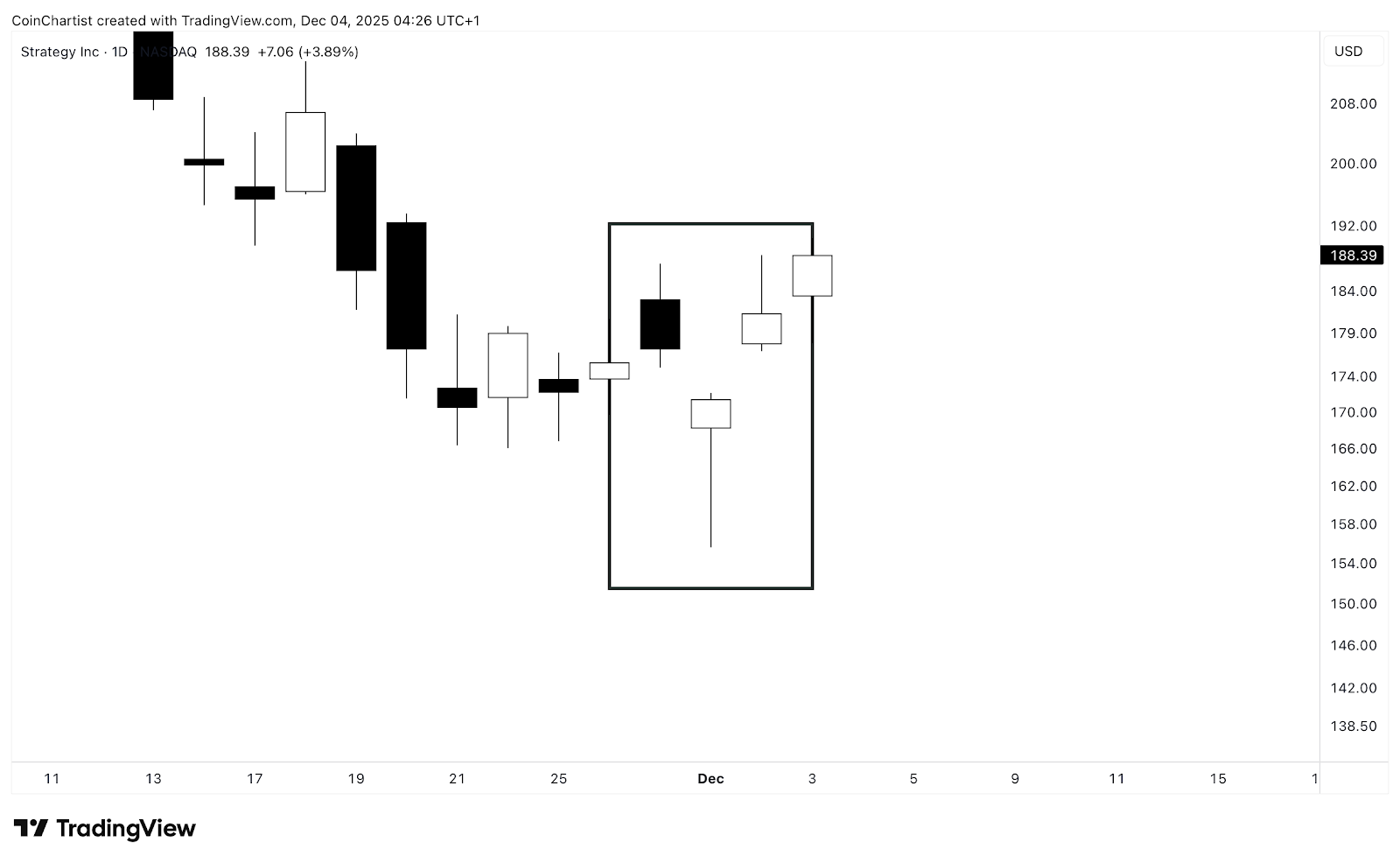
The reversal in MSTR could boost Bitcoin and crypto
Several technical indicators, such as the Relative Strength Index were at or near levels associated with bear markets, so time will tell if this bounce will have legs or turn out to be a “dead cat.” One sign there may be more to this short-term reversal: Strategy (MSTR) formed a candlestick pattern referred to as an Abandoned Baby. The pattern is a bullish reversal pattern, and a high correlation with MSTR could cause Bitcoin to follow in its footsteps if it does march higher.
Economic Weakness Emerges
Adding to macro jitters, U.S. ISM Manufacturing PMI dropped to 48.2 in November — its lowest in months — pointing to deeper contraction in manufacturing. At the same time, like-for-like data from the broader manufacturing index points to modest output growth, but demand is weakening and inventories are building — a classic signal of potential slowdown ahead.

Bull markets typically happen when PMI is trending above 50
Globally, the OECD’s latest outlook projects decelerating growth across major economies — including the U.S., Eurozone, and China — through 2026–2027. The slowdown is tied to structural forces: aging populations, shifting global trade and investment flows, and an evolving financial environment where traditional rate-policy levers are becoming less effective.
Goodbye QT
As of December 1, 2025, the Fed officially ended its quantitative tightening (QT) program. That means it stopped allowing its holdings of Treasuries and mortgage-backed securities to run off. The end of QT could improve liquidity conditions in the financial system, which could trickle into risk-assets like crypto.
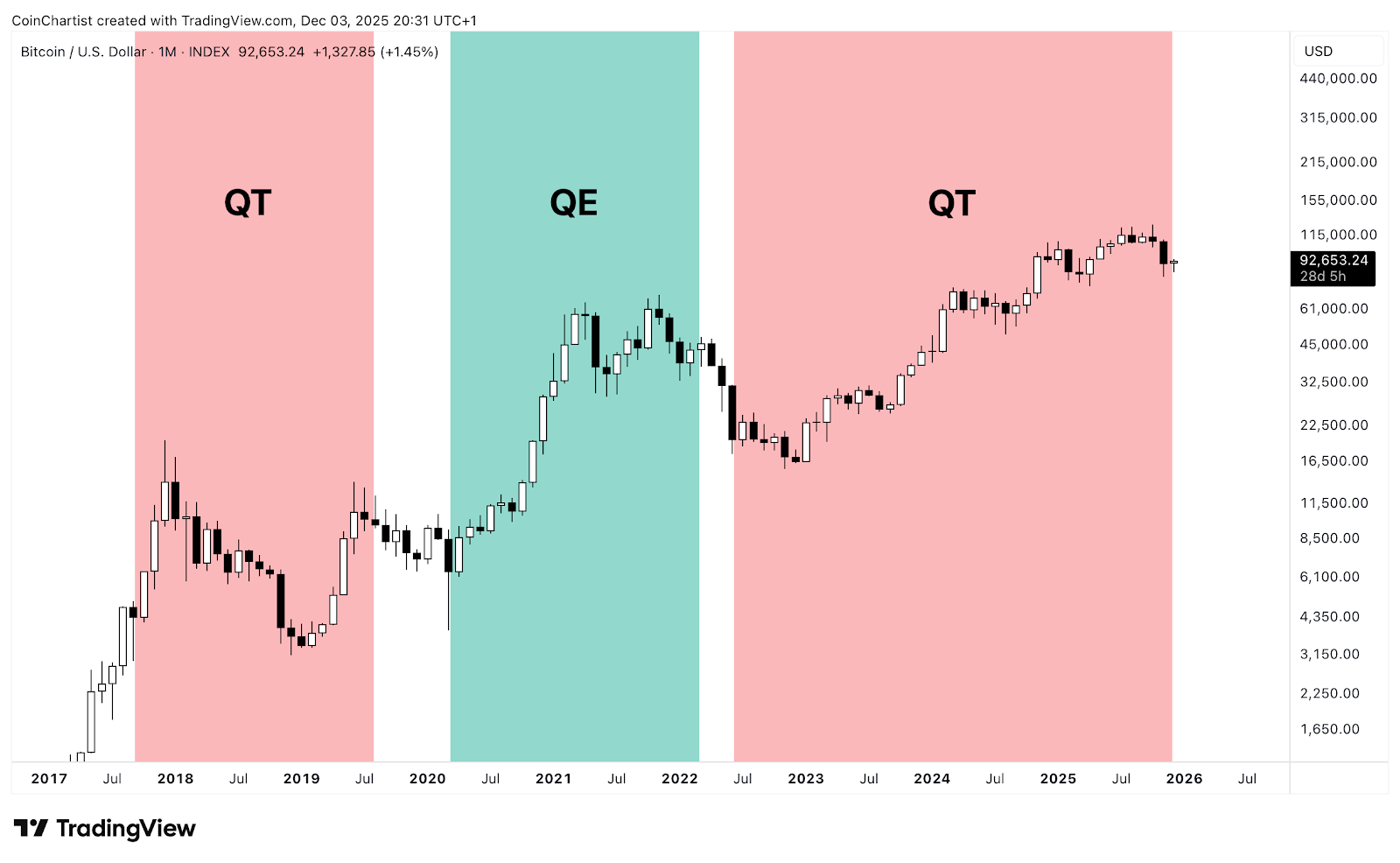
A historical look at QT & QE
The last time the Fed ran its QT program was between October 2017 and September 2019. From October through December of 2017 Bitcoin climbed by over 200%, but then immediately began a bear market in January of 2018 as altcoins made their peaks. There was also a sharp 330% rally from Bitcoin’s 2018 bear market bottom just before QT came to an end. Half a year later we had COVID and the resumption of QE, flooding markets with liquidity and pushing crypto to all-time highs.
Fed Up With Powell
On Dec 2, 2025, Trump said he will name a new Fed Chair “early next year,” ahead of the current Chair Jerome Powell’s term ending in May 2026. The leading candidate appears to be Kevin Hassett, currently the White House’s National Economic Council Director, according to Trump’s remarks and speculation.
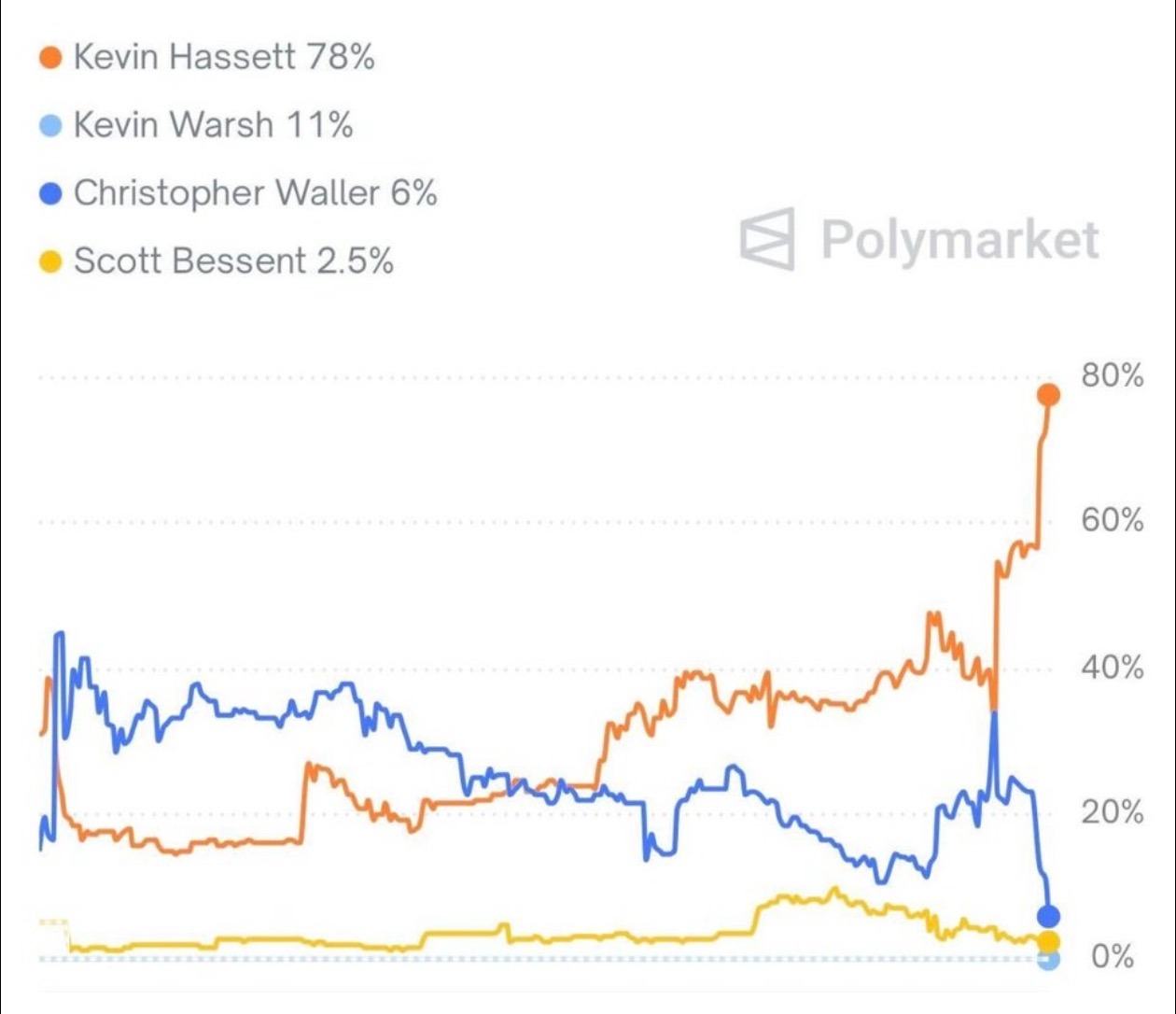
Speculation points to Kevin Hassett as Powell’s replacement
Trump’s criticism of Powell centers on the belief that interest rates have stayed too high too long — he wants easier monetary policy to support cheaper credit and stimulate growth (beneficial for crypto). But markets don’t like surprises. A new Fed Chair brings uncertainty, especially if markets expect a dovish shift. As with QT’s end, the actual policy execution — not the theory — will determine which direction markets take.
Conclusion
This past week was a reminder that crypto no longer trades in a vacuum. A hawkish signal from Japan, weakening global growth data, a shift in Fed liquidity policy, and political pressure on future monetary leadership all collided into a single storm — and the crypto market felt every bit of it.
The good news? Liquidity headwinds appear to be easing with the end of QT, and technical conditions hint at the potential for a short-term recovery.

Suggested Posts





YouHodler is regulated in Switzerland, the EU and Argentina.

YouHodler SA
Registered financial intermediary

YouHodler Italy S.R.L.
Registered as a VASP with the OAM

YouHodler SA
Registered as VASP with Banco de España

YouHodler SA Branch in Argentina.
Registered as a VASP with the CNV.