


Dollar Dominance, Gold Resilience, and Bitcoin’s Fear Reversal

Markets spent the week recalibrating around one central variable: the U.S. dollar. While headlines rotate between geopolitics, rates, and earnings, the real pressure valve across global assets continues to be currency direction. When the dollar trends, everything else adjusts — liquidity conditions, commodity pricing, and risk appetite.
At the same time, crypto markets are attempting to stabilize after a sharp bout of fear. Bitcoin has quietly refused to make new local lows, volatility is compressing, and altcoins are responding with explosive short-term rebounds. The question now is whether this is just reflexive relief — or the early stage of something more durable.
The Dollar Is the Axis of This Entire Market
The U.S. dollar remains the most important chart in global macro right now. After an extended move higher, momentum appears to be stalling. If the dollar rolls over decisively, it would ease financial conditions globally — particularly for risk assets and commodities that have been suppressed under tight liquidity.
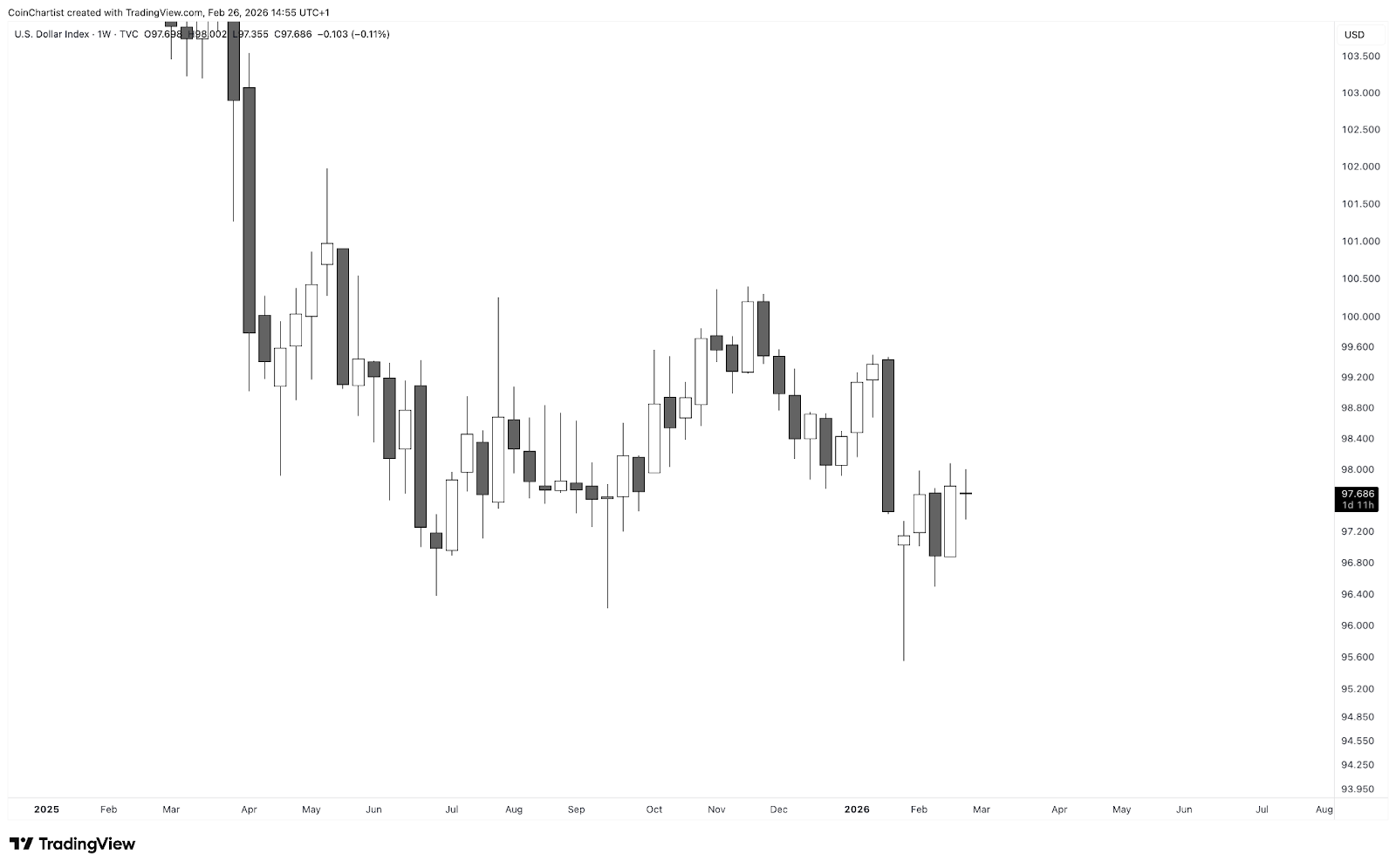
The DXY has stalled after a recent advance
This is why watching DXY matters more than obsessing over every economic data print. A softer dollar supports gold, lifts emerging markets, and removes pressure from Bitcoin. A renewed breakout higher would do the opposite. For now, the dollar looks heavy — and markets are reacting accordingly.
Traditional Markets Are Sending Divergent Signals
Equities are holding up, but leadership is narrowing. Defensive sectors and hard assets are firming while cyclicals struggle to expand. Gold and silver behavior is especially important here — are they breaking out on fear or simply reflecting dollar softness?
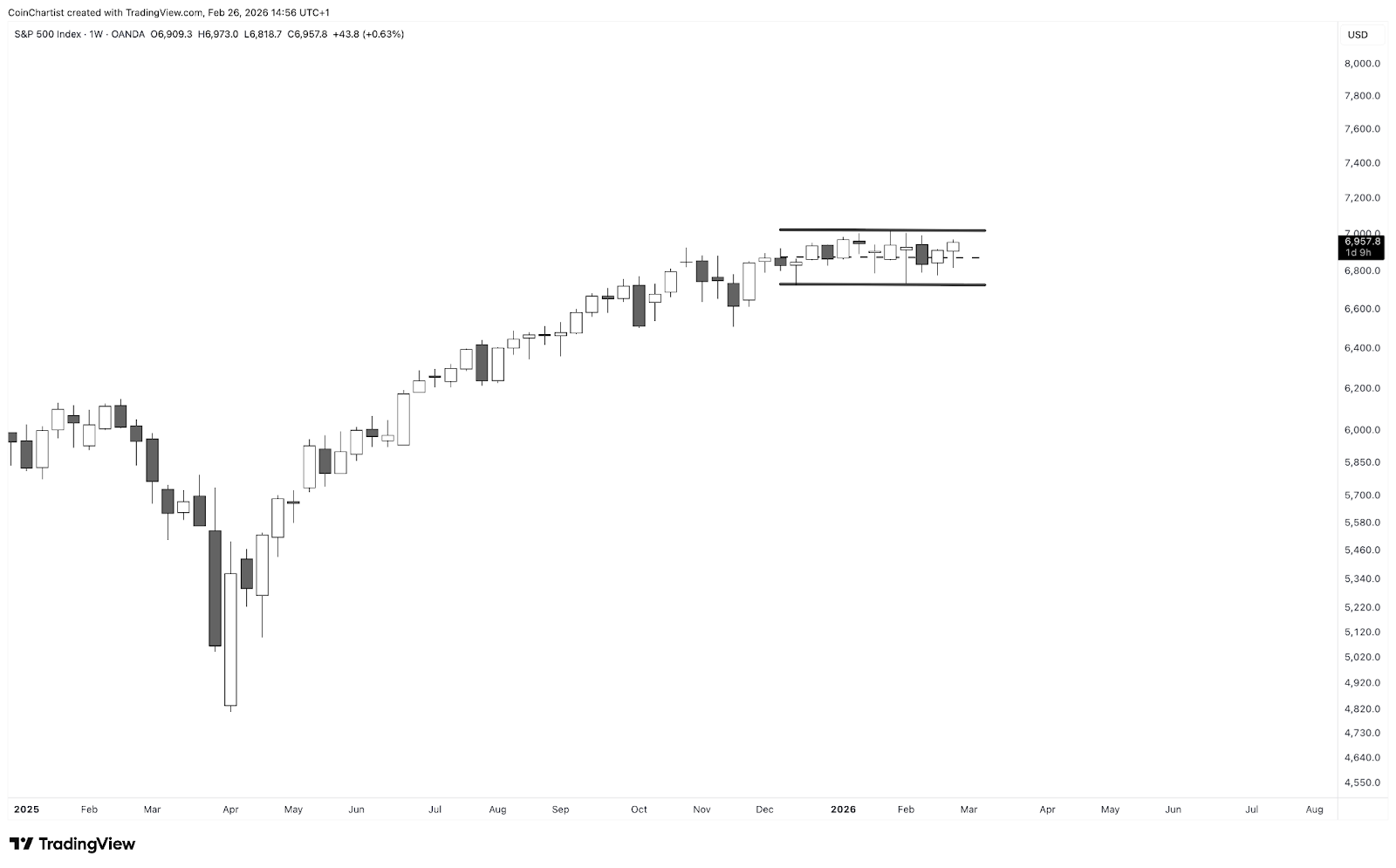
Equities remain resilient
Bond volatility remains elevated. If rates refuse to collapse despite growth concerns, that suggests structural inflation risk remains embedded. This is not 2008-style deflation panic. It’s something more complex — and markets know it.
Bitcoin Rebounds From Extreme Fear as Volatility Compresses
Bitcoin has staged a notable rebound from extreme fear conditions. Importantly, price failed to make new local lows during the latest wave of panic — a subtle but critical shift in character. When markets stop going down on bad news, it often signals seller exhaustion.
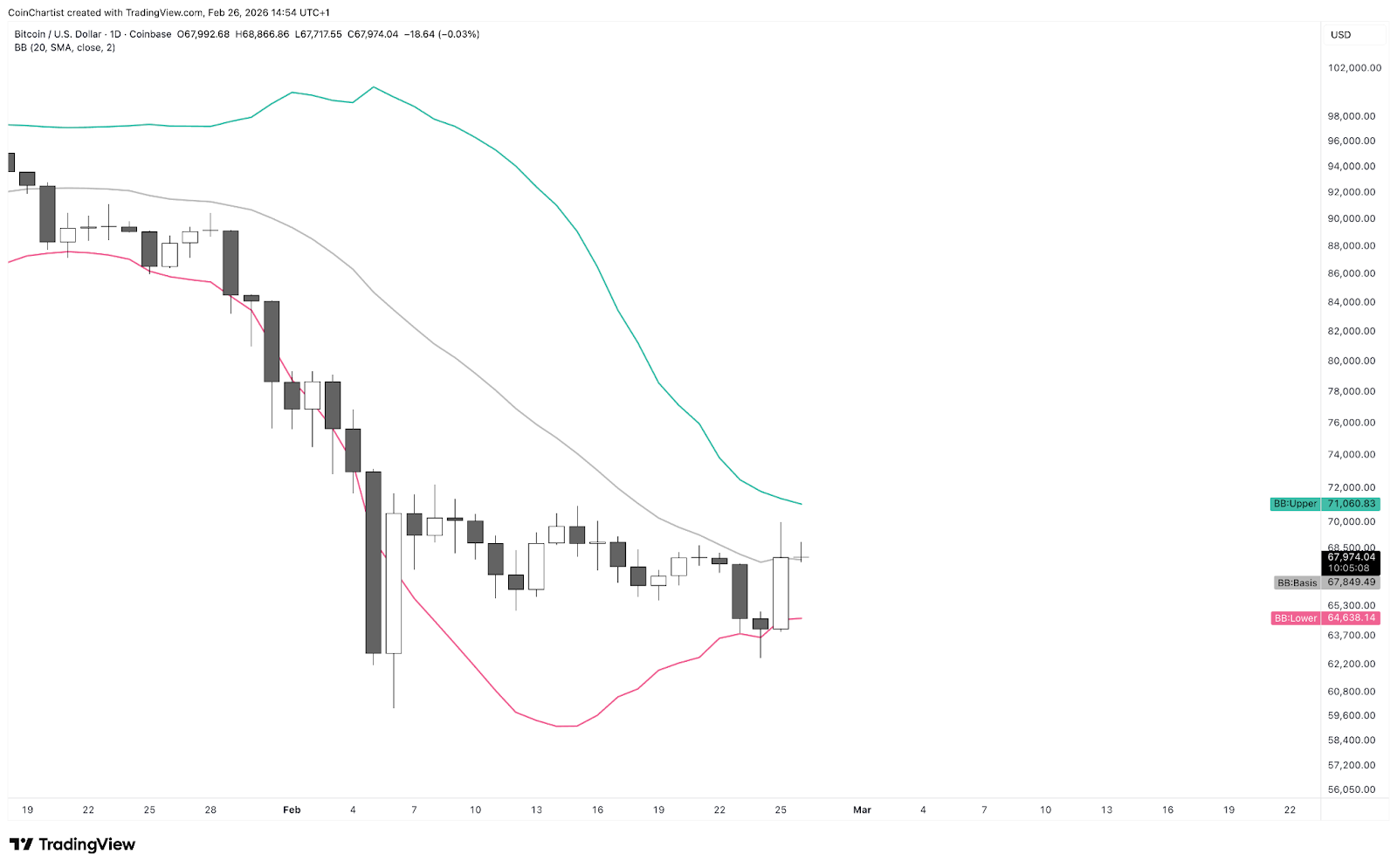
Bitcoin Bollinger Bands are compressing
Bollinger Bands are now tightening, highlighting that a volatility expansion is likely approaching. Compression phases like this don’t last forever. If Bitcoin can continue holding higher lows while volatility coils, the path of least resistance appears to be shifting upward.
Altcoins Surge as Bitcoin Stabilizes
Altcoins responded quickly to Bitcoin’s bounce, with several posting double-digit percentage gains. Chainlink, Litecoin, and SUI stand out as relative leaders in the early phase of this rebound. Participation is improving — at least tactically.
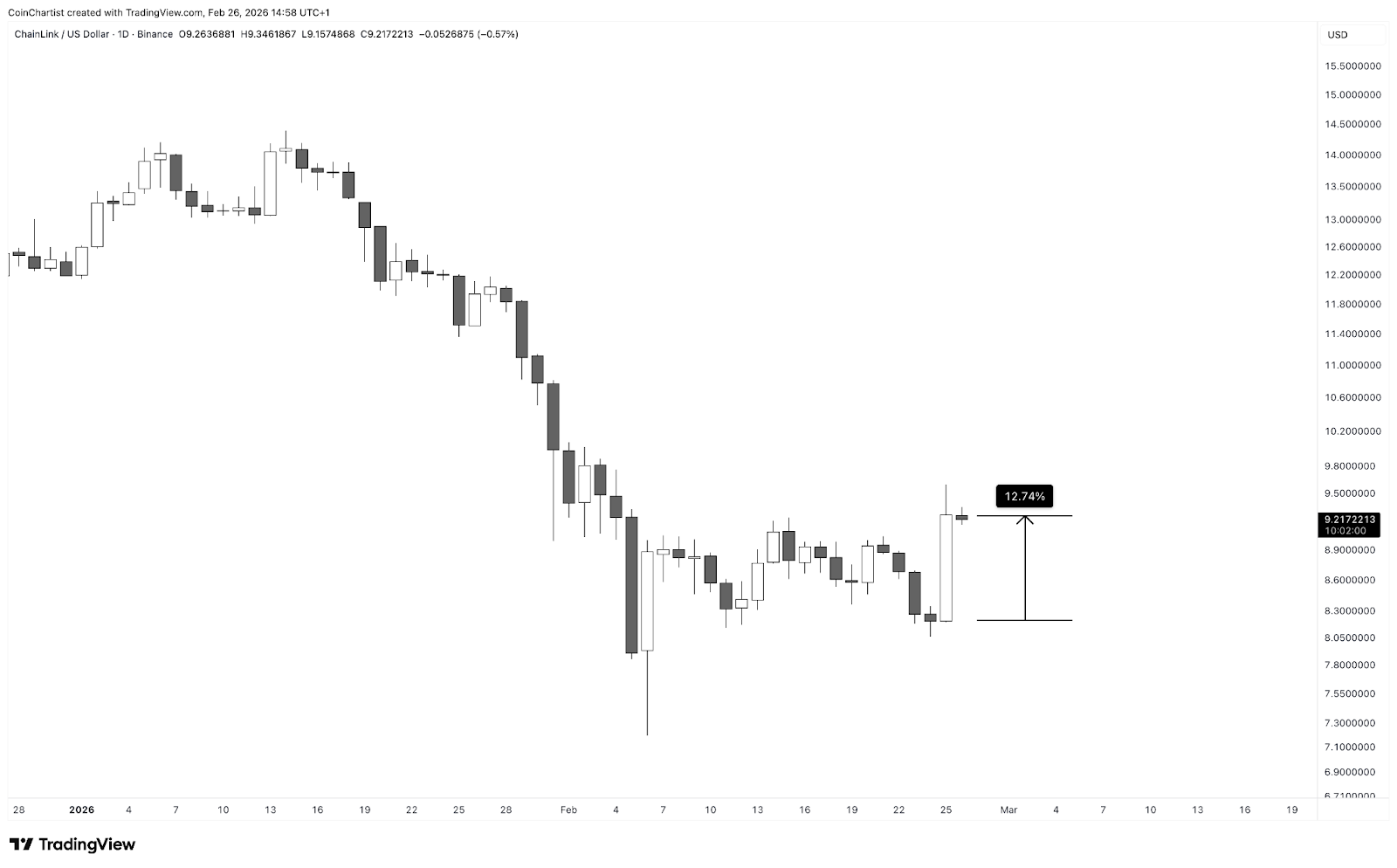
Chainlink posts double-digit gains
That said, sustainability depends on Bitcoin maintaining strength. Alt seasons don’t begin in isolation; they follow Bitcoin stability and expanding liquidity. For now, this looks like a reflexive beta response — but the intensity of the move suggests risk appetite is not dead.
Summary
The dollar remains the fulcrum. If it continues to soften, financial conditions ease, and both traditional and digital risk assets have room to climb. If it reverses higher, volatility will return quickly. The next major move across markets likely starts there.
Bitcoin’s refusal to break down, paired with tightening volatility, deserves respect. Altcoins are responding with force. The coming weeks will reveal whether this is a temporary relief rally — or the beginning of a broader shift in tone.

Suggested Posts





YouHodler is regulated in Switzerland, the EU and Argentina.

YouHodler SA
Registered financial intermediary

YouHodler Italy S.R.L.
Registered as a VASP with the OAM

YouHodler SA
Registered as VASP with Banco de España

YouHodler SA Branch in Argentina.
Registered as a VASP with the CNV.