


Potential cryptocurrencies worth considering for investment in 2026
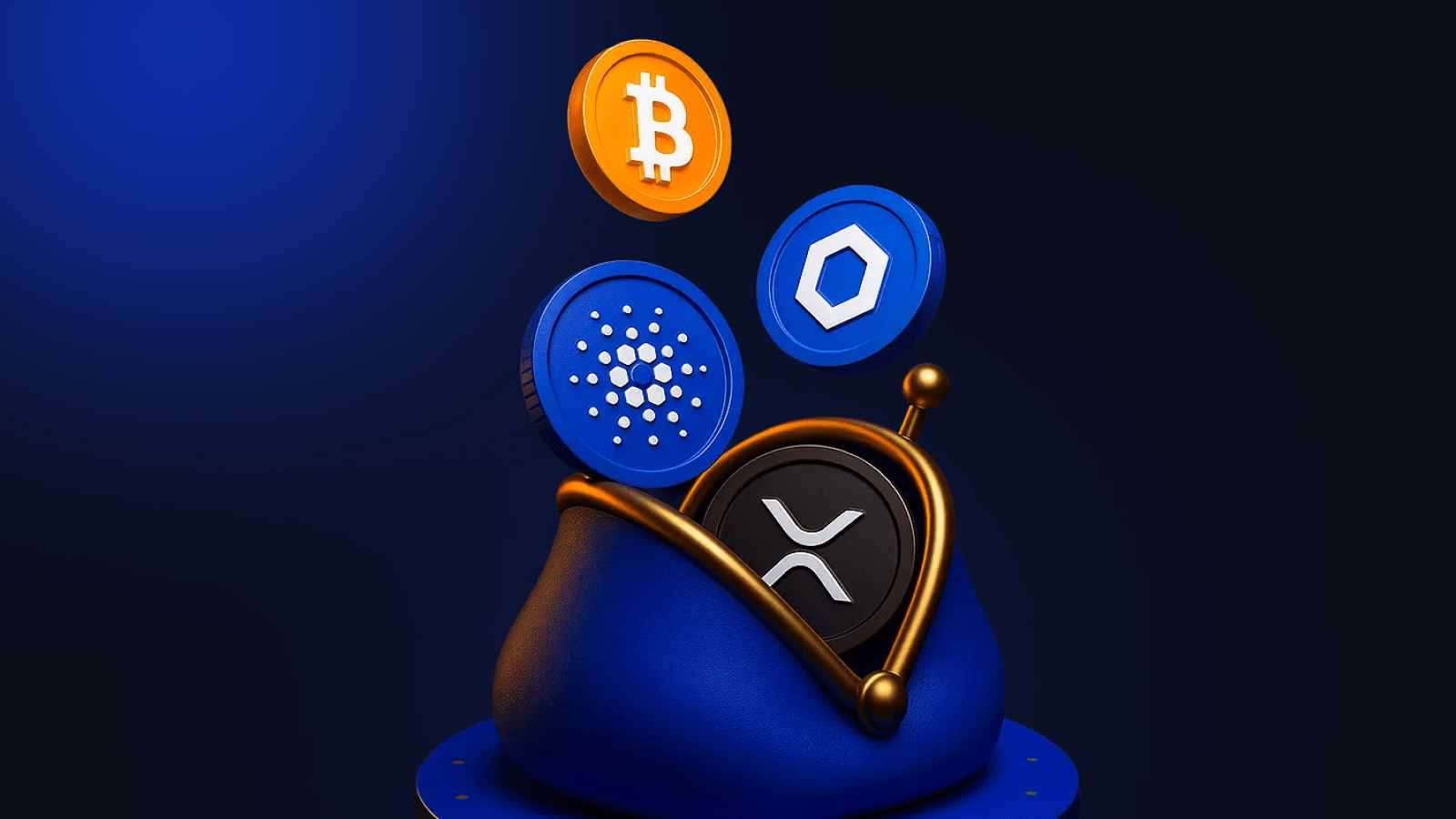
Searching for the best crypto to invest in 2026? Here’s a look at the 10 coins with strong fundamentals worth considering.
With thousands of cryptocurrencies flooding the market, separating genuine investment opportunities from overhyped projects can feel overwhelming. Investors seeking long-term exposure in crypto face a range of options, from large-cap assets to specialized platforms. This article reveals the top 10 crypto coins to invest in 2026, focusing specifically on projects with real utility and staying power.
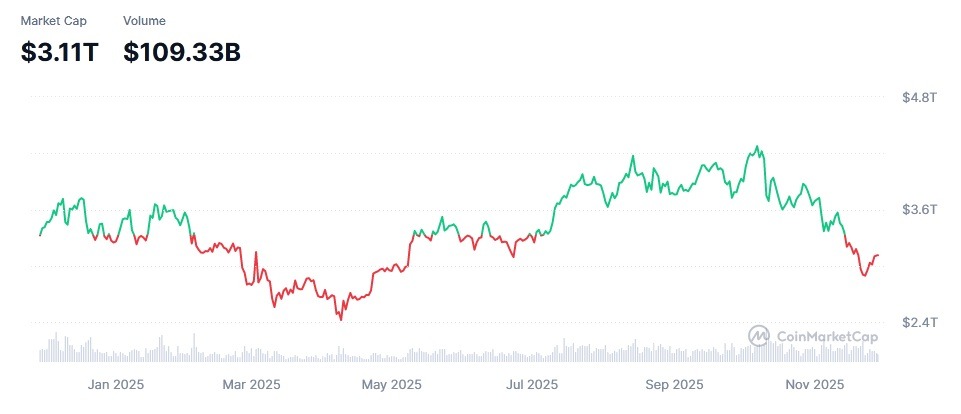
Crypto market overview: late 2025
By the end of 2025, the crypto market is experiencing sharp volatility following a strong rally earlier in the year. Bitcoin’s fall from above $126,000 to the $80,000-$90,000 range has weighed heavily on broader sentiment, pulling Ethereum and most major altcoins down with it. Forced liquidations and reduced leverage have accelerated the decline, though liquidity remains intact and the market still holds several trillion dollars in value.
Despite price weakness, underlying activity shows resilience. Stablecoin supply continues to expand, signaling substantial capital waiting on the sidelines, while DeFi usage and total value locked have stabilized after earlier drawdowns. This suggests that core on-chain infrastructure is functioning reliably even as speculative flows retreat.
Market direction heading into 2026 will hinge on macroeconomic conditions and institutional participation. If global liquidity improves and risk appetite returns, the current reset could pave the way for renewed growth. For now, caution dominates, but structural engagement across major networks indicates that the long-term trend remains intact.
Top 10 crypto assets to invest in 2026
So, what is the best cryptocurrency coin to buy in 2026? We have selected 10 cryptocurrencies that we think are worth considering in the coming year of 2026.
Bitcoin (BTC)
Bitcoin remains the main asset in the crypto market, supported by deep liquidity and a track record that attracts both institutional and retail capital. Its fixed supply schedule and growing acceptance as a macro hedge continue to strengthen long-term interest.
In 2026, attention will likely focus on how institutional inflows evolve, especially as regulated products gain traction and large asset managers expand their offerings. Custody developments and corporate treasury decisions often influence market expectations.
Although short-term movements can be tied to rate decisions and shifts in global risk appetite, Bitcoin’s structural appeal lies in its predictable issuance and broad acceptance as a digital store of value. For investors building a multi-year position, BTC often serves as the stabilizing element in a diversified crypto allocation thanks to its resilience during periods of heightened volatility and its leadership during renewed growth cycles.
Risk tier: Conservative (core holding).
Key statistics (as of November 28, 2025):
- Price: $91,593
- Market cap: $1.82T
- All-time high: $126,198
Ethereum (ETH)
Ethereum Ethereum is the most established smart contract platform, supported by a large developer base and a steady flow of upgrades aimed at improving efficiency and scaling capacity. Its transition to proof-of-stake reduced energy use and opened the door for ongoing refinements that make the network more sustainable.
Heading into 2026, the focus remains on enhancements that raise throughput and lower transaction costs, along with broader adoption of rollups that extend Ethereum’s reach without sacrificing security. Progress in zero-knowledge technologies, improvements to data availability, and continued expansion of the staking ecosystem are expected to shape demand for ETH.
Market performance often responds to changes in network activity, staking flows, and development milestones. As decentralized applications (dApps), financial tools, and enterprise integrations mature, Ethereum maintains a strong position for investors seeking exposure to a platform with deep usage, long-term relevance, and a well-defined upgrade path.
Risk tier: Moderate to Conservative.
Key statistics (as of November 28, 2025):
- Price: $3,035
- Market cap: $365.52B
- All-time high: $4,953
Solana (SOL)
Solana is known for high throughput and low transaction costs, giving it strong appeal among developers building trading platforms, consumer apps, and NFT-focused products. Its performance improvements over the past year have helped rebuild confidence after earlier network disruptions, and engineering efforts continue to target higher stability and higher throughput.
Looking toward 2026, attention is centered on upgrades such as Firedancer, which aims to boost efficiency and reduce latency by introducing an independent client implementation. Successful deployment would strengthen Solana’s technical foundation and support larger-scale applications, including those tied to payments and real-time interactions.
SOL has shown strong momentum during periods of elevated user activity, and renewed interest in AI-driven tools and consumer-facing projects has kept its ecosystem active. While competition among L1 networks remains intense, Solana offers a distinct performance profile that appeals to teams seeking speed and low execution costs, giving the token meaningful upside potential if adoption trends continue.
Risk tier: Moderate.
Key statistics (as of November 28, 2025):
- Price: $140
- Market cap: $78.66B
- All-time high: $294
BNB (BNB)
BNB serves as the core utility asset for the BNB Chain ecosystem, which combines an active smart-contract platform with the advantages of strong exchange-driven liquidity. Its role in transaction fees, staking, and network governance gives it consistent demand, while the wider ecosystem continues to attract developers focused on scalable consumer and DeFi applications.
Through 2026, BNB Chain is advancing upgrades aimed at improving throughput and reducing confirmation times, with planned enhancements designed to introduce native privacy features for both token transfers and smart contract calls as well as support more complex workloads and larger user bases. These technical steps, combined with ongoing expansion into rollups and sidechain solutions, are expected to make the network more competitive.
Market interest in BNB often reacts to growth in developer participation, ecosystem funding, and product releases connected to the broader Binance brand. Although regulatory scrutiny around exchange-related tokens remains a factor, BNB continues to benefit from extensive real-world usage and a large community that reinforces its position among top smart-contract networks.
Risk tier: Moderate.
Key statistics (as of November 28, 2025):
- Price: $889
- Market cap: $122.45B
- All-time high: $1,370
Arbitrum (ARB)
Arbitrum has maintained a strong position among Ethereum’s scaling solutions by combining high throughput, mature tooling, and broad liquidity across major DeFi protocols. Developers value its predictable performance and compatibility with existing Ethereum infrastructure, which simplifies deployment and encourages sustained growth in contract activity.
The network’s plans for 2026 emphasize efficiency improvements, expanded support for rollup-based execution, and continued refinement of its governance framework. These steps aim to improve reliability and accommodate larger applications, particularly in trading, lending, and complex automated strategies that benefit from low fees and consistent execution.
ARB’s appeal is reinforced by its large ecosystem, active funding programs, and strong traction with leading protocols. This depth helps maintain user activity even when market conditions shift. Although competition among Layer 2s is intensifying, Arbitrum retains a clear advantage in adoption and liquidity, making it one of the most resilient and widely supported scaling solutions tied to Ethereum.
Risk tier: Moderate to High (competition with other L2s).
Key statistics (as of November 28, 2025):
- Price: $0.22
- Market cap: $1.22B
- All-time high: $2.40
Chainlink (LINK)
Chainlink plays a central role in connecting blockchain applications with reliable external data, making it a foundational component for many DeFi platforms and enterprise integrations. Its data services, automation tools, and cross-chain messaging systems support a wide range of smart-contract use cases that depend on accurate and timely information.
Looking ahead to 2026, Chainlink’s plans for expanding Cross-Chain Interoperability Protocol (CCIP) adoption, enhancing staking mechanisms, and onboarding additional institutional partners are likely to draw considerable attention. Growing usage of tokenized assets and more complex financial products increases demand for secure data feeds, which strengthens LINK’s utility within the network.
Price movement often reflects shifts in network usage, partnerships, and product rollouts. As more protocols integrate Chainlink services for data, automation, and interoperability, the token continues to benefit from consistent real-world application. Its established reputation and active ecosystem give LINK solid potential for long-term investors seeking assets tied to infrastructure that supports multiple sectors across crypto.
Risk tier: Moderate (infrastructure project with wide adoption potential).
Key statistics (as of November 28, 2025):
- Price: $13.30
- Market cap: $9.25B
- All-time high: $52.88
Litecoin (LTC)
Litecoin is a longstanding proof-of-work cryptocurrency designed for low-cost payments, with a maximum supply of 84 million coins. Over the past several years, its network has seen a steady rise in hash rate, reflecting increased miner commitment, even as its price has remained relatively stable. This divergence suggests confidence in the network’s long-term security and potential, supported by modern ASIC deployments and efficient mining operations.
The implementation of MimbleWimble Extension Blocks (MWEB) adds optional privacy features, broadening Litecoin’s appeal for confidential transfers. Upcoming smart contract support via Litecoin virtual machine (LitVM) and the anticipated 2027 halving may further influence network dynamics and market behavior.
Market interest in LTC is tied to adoption in payments, wallet integrations, and the overall health of its mining ecosystem. Its combination of established liquidity, growing network security, and ongoing feature development positions Litecoin as an interesting option for investors seeking a mid-cap, PoW asset with practical utility and long-term resilience.
Risk tier: Moderate.
Key statistics (as of November 28, 2025):
- Price: $84.82
- Market cap: $6.5B
- All-time high: $412
Avalanche (AVAX)
Avalanche is designed for high performance and flexible scaling, supported by its subnet architecture that allows developers to create customized blockchains with specific rules, virtual machines, and permissioning. This approach has attracted teams working on gaming, institutional products, and asset tokenization, all of which benefit from dedicated execution environments.
Heading into 2026, Avalanche is pushing deeper into real-world asset initiatives, enterprise partnerships, and improvements to its consensus engine. Enhancements to subnet tooling and upcoming upgrades aimed at reducing fees and increasing throughput are expected to broaden the network’s value to developers building specialized or regulated applications.
Market interest in AVAX often responds to project launches, institutional collaborations, and expansions of its subnet ecosystem. While competition remains strong among smart-contract platforms, Avalanche’s combination of speed, customization, and growing institutional engagement positions it as a compelling option for investors seeking exposure to an L1 with distinct architectural advantages.
Risk tier: Moderate to High (depends on enterprise traction and token supply events).
Key statistics (as of November 28, 2025):
- Price: $15.01
- Market cap: $6.44B
- All-time high: $146
Render (RENDER)
Render focuses on decentralized GPU rendering, enabling artists, developers, and AI-focused teams to access distributed computing power for tasks that traditionally require expensive hardware. Its model creates an open marketplace where users can contribute idle GPU resources and earn RENDER, encouraging a scalable supply of computation for graphics, simulations, and machine-learning workloads.
Looking toward 2026, progress on the transition toward the Render Network’s new infrastructure, including improved resource allocation and multi-client support, is expected to enhance reliability and attract larger creative and AI-driven projects. Integration efforts with major design tools and expanded support for real-time rendering workflows may further boost network utilization.
Market sentiment around RENDER often moves with developments in AI, digital production, and hardware demand. As interest in computationally intensive applications grows, Render stands out as a practical solution that distributes costs while maintaining high-quality output. Its combination of real usage, strong branding in the creative sector, and alignment with fast-growing industries supports its long-term potential.
Risk tier: High (narrow niche but strong product-market fit if adoption accelerates).
Key statistics (as of November 28, 2025):
- Price: $1.80
- Market cap: $$938.56M
- All-time high: $13.60
Monero (XMR)
Monero remains one of the most recognized privacy-focused cryptocurrencies, offering strong protections for transaction details through features like stealth addresses and ring signatures. Its commitment to confidentiality appeals to users who prioritize financial privacy in both personal and business contexts, giving XMR a durable niche.
As 2026 approaches, development continues to emphasize efficiency, improved wallet performance, and periodic protocol upgrades that strengthen security. The move toward more efficient proofs and ongoing research into optimizing transaction sizes are expected to enhance usability while preserving privacy guarantees. Community-driven governance and a steady development cadence help maintain trust in the project’s direction.
Market behavior for XMR is shaped by regulatory discussions, adoption among privacy-oriented users, and the pace of technical refinements. While oversight pressures may influence exchange accessibility in some regions, Monero’s established user base and proven privacy features keep it relevant for investors seeking assets with a clear, long-standing purpose supported by continuous technical progress.
Risk tier: High (regulatory risk; exchange availability matters).
Key statistics (as of November 28, 2025):
- Price: $409
- Market cap: $7.55B
- All-time high: $517
Summary
This article reviewed 10 cryptocurrencies with strong potential heading into 2026, covering assets across large-cap, mid-cap, and specialized sectors. Each project was evaluated on network fundamentals, technical progress, adoption trends, liquidity strength, and upcoming catalysts that may influence long-term performance. Together, these assets represent a diversified selection of payment networks, smart-contract platforms, scaling solutions, AI-focused infrastructure, privacy projects, and established proof-of-work systems.

Suggested Posts



YouHodler is regulated in Switzerland, the EU and Argentina.

YouHodler SA
Registered financial intermediary

YouHodler Italy S.R.L.
Registered as a VASP with the OAM

YouHodler SA
Registered as VASP with Banco de España

YouHodler SA Branch in Argentina.
Registered as a VASP with the CNV.