


Inflation Risks and Altcoin Potential

Crypto at a Crossroads: Fed Cuts, Inflation Risks, and Altcoin Potential
The Fed’s first rate cut opens the door—but crypto’s next move hinges on labor, liquidity & leverage
Before moving ahead into the final quarter of the calendar year, let’s take a look back at the most important macro moments of September 2025, along with standout performance across the cryptocurrency market.
The Fed’s First Cut of 2025
The United States Federal Reserve announced its first interest rate cut of the year, lowering the Federal funds target rate by 25 basis points to a range of 4.00–4.25%.
However, Federal Reserve Chair Jerome Powell signaled rising concern over the labor market. “Downside risks to employment have risen,” he cautioned.
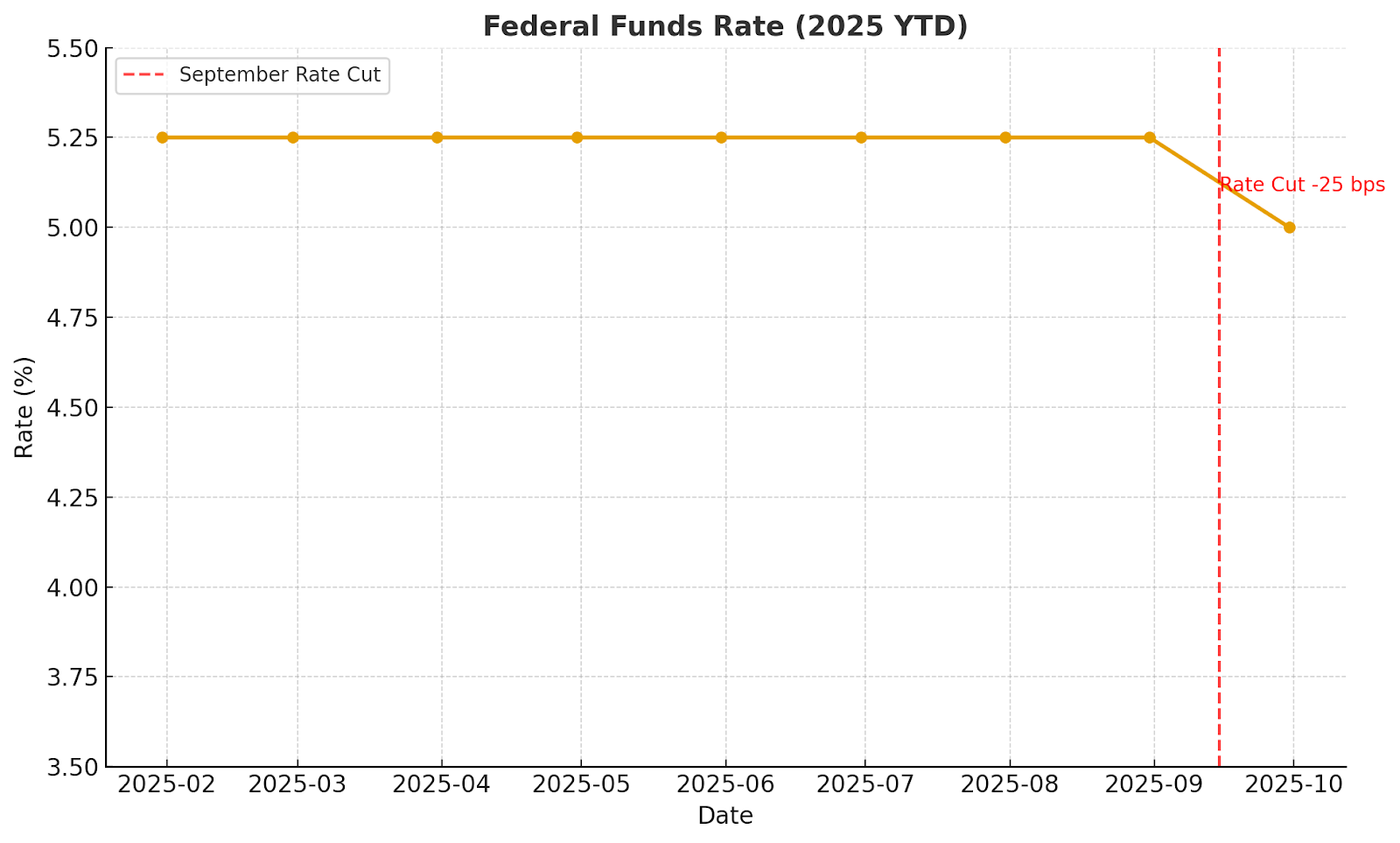
Fed officials anticipate additional cuts, targeting around 3.50–3.75% by the end of 2025. Despite a desire to counteract labor market weakness, Powell stressed the importance of avoiding overly aggressive action that could undermine progress on inflation.
Inflation remains elevated. The PCE index—the Fed’s preferred inflation gauge—is still running above 2%, while core inflation remains sticky.
Given the balance between labor weakness and persistent inflation, cryptocurrencies may be especially sensitive to nuances in the Fed’s messaging.
Market Reaction: September’s Crypto Shakeout
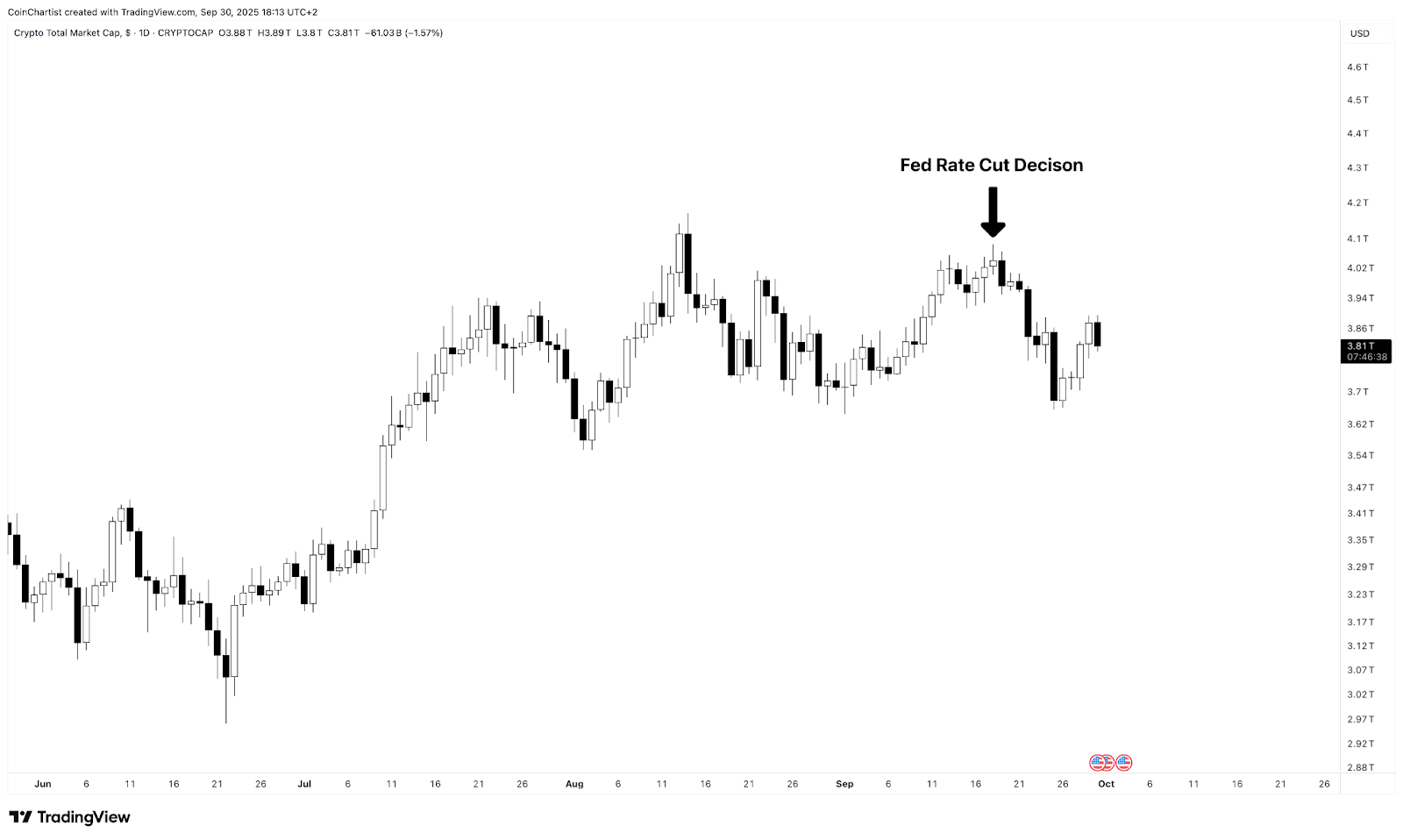
Since the mid-September rate cut, cryptocurrencies have suffered a near-term decline. Bitcoin is down about 7% since the announcement, while many altcoins posted double-digit losses.
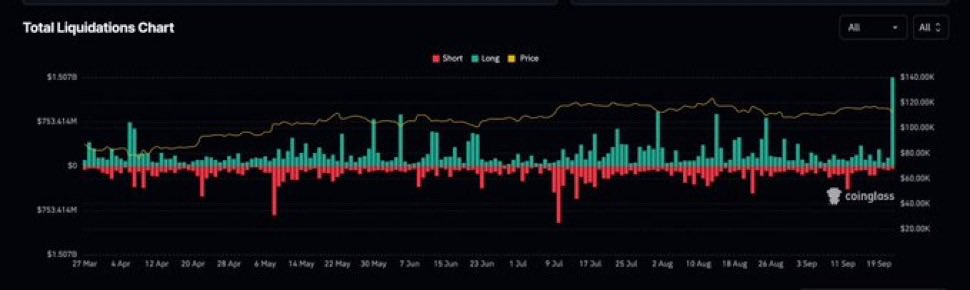
The sharp selloff triggered one of the largest liquidation events of 2025, wiping out $1.5 billion in leveraged positions. Bitcoin currently trades near $113,000, holding above critical local support at $107,000.
The total cryptocurrency market shed more than $400 billion in value but has since recovered about half of that, bringing total market capitalization back to around $3.8 trillion.
Several top altcoins showed significant resilience. Avalanche (AVAX) closed September up roughly 24%, while Binance Coin (BNB) gained about 14%. Dogecoin (DOGE), Solana (SOL), and Bitcoin Cash (BCH) also finished the month positive.
Ethereum (ETH), which led in August, slipped 7% and is again trading below its 2021 all-time high resistance level. Chainlink (LINK), after a strong run earlier in the year, lost 8% in September.
Looking forward, altcoin ETFs could begin launching as early as October following recent SEC policy loosening, potentially reshaping market structure and fund flows. The crypto market in Q4 2025 faces meaningful macro headwinds but may benefit from fundamental tailwinds, particularly in altcoins.
Cryptocurrencies: The Calm Before the Storm?
From a technical perspective, the cryptocurrency market could soon see an increase in volatility. Volatility is cyclical and can be visualized using the Bollinger Bands. The Bollinger Bands expand when there’s substantial volatility, and contracts or narrows when volatility is low.
Bitcoin (BTC) is currently at the tightest the weekly and monthly Bollinger Bands have ever been historically when measured using a companion indicator called Bollinger Band Width (BBW). When the Bollinger Bands begin to expand once again, it is a signal that the market is ready to make a more sustainable move.

In many top altcoins, higher timeframes such as the quarterly are hinting at a move to the upside after Q3’s candlestick came to a close at the end of September. Q3’s close in Ethereum (ETH), Chainlink (LINK), Solana (SOL), and Litecoin (LTC), for example, each confirmed a three-candle bullish reversal pattern. Such Japanese candlestick patterns, like the Morning Star pattern or Three-Inside Up, suggest an uptrend will follow.
While XRP doesn’t exhibit a bullish Japanese candlestick setup, the monthly RSI is at 69.74. Above 70 on the RSI is considered overbought territory. However, this is a misnomer as readings above 70 typically trigger the most bullish moves and extreme buying pressure. If XRP price can push slightly higher, it could lead to the strongest phase of its ongoing advance.
What to Watch in Q4
As we enter a potentially volatile final quarter, caution is warranted. All eyes turn to the Fed’s October 28–29 meeting. Traders and investors should closely monitor key economic data—particularly unemployment and inflation—to anticipate policy shifts.
Heavy liquidations in September highlight the risks of crowded leverage. Derivatives traders should remain alert to volatility around macro announcements, as market makers often target overextended positioning.
If liquidity continues to contract, downside pressure could build for a bearish Q4. Conversely, if institutional inflows, treasury allocations, or new ETF products gain traction, markets could see a year-end rally. A long-awaited altcoin season remains possible if Bitcoin dominance weakens further.
Meanwhile, cyclical volatility is already stirring. This environment could offer traders abundant intraday opportunities while setting the stage for the next decisive trend—bullish or bearish.
Conclusion
September proved that even modest policy shifts can ripple forcefully through crypto markets. The Fed’s cautious stance leaves investors straddling a fine line between hopes for stimulus and fears of economic slowdown. Altcoins, while volatile, are showing signs of resilience and could be poised to benefit most from new structural catalysts like ETFs.
As Q4 begins, the market sits at a crossroads: liquidity and leverage will dictate whether this quarter ends in a bearish retreat or a bullish breakout. Either way, traders who stay attentive to macro signals and nimble in execution will find no shortage of opportunity.

Suggested Posts




YouHodler is regulated in Switzerland, the EU and Argentina.

YouHodler SA
Registered financial intermediary

YouHodler Italy S.R.L.
Registered as a VASP with the OAM

YouHodler SA
Registered as VASP with Banco de España

YouHodler SA Branch in Argentina.
Registered as a VASP with the CNV.