


Global Macro Pressure Builds as Crypto Stands at a Critical Juncture

Over the past week, crypto markets have been driven less by internal narratives and more by global macro forces that continue to reshape liquidity conditions. While price action has stabilized following a sharp selloff, the broader environment suggests markets are still navigating an important transition.
Shifting central bank policy and the unwinding of the yen carry trade continue to dampen risk appetite. Recession indicators, such as unemployment, are rising. Liquidity is contracting. At the same time, cryptocurrency technology is poised to replace the existing financial system. The cryptocurrency market is at perhaps one of its most important inflection points since its inception.
Global Liquidity Is Quietly Tightening
One of the most significant topics this week has been the Bank of Japan’s expected rate hike, a move that signals a clear departure from decades of ultra-loose monetary policy. Even incremental tightening in Japan carries global consequences due to the role the yen has played as a funding currency for leveraged positions across financial markets.
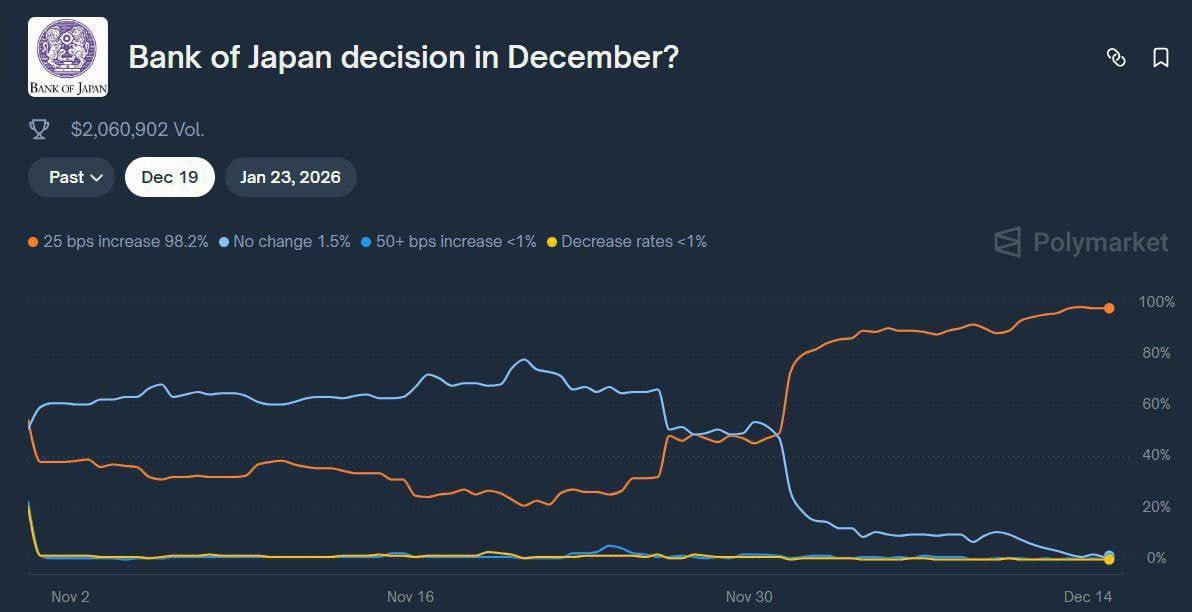
Polymarket shows a 98% expectation of a 25 bps increase
As expectations build around further normalization, the unwinding of yen-funded trades has contributed to a broader risk-off tone. For crypto markets, this matters because higher global funding costs reduce the appetite for leverage and speculative exposure. Japan’s policy shift has therefore become a meaningful macro variable, not only for US markets, but for Europe and global risk assets as a whole.
Labor Data and Policy Divergence Cloud the Outlook
Alongside developments in Japan, US labor data has continued to soften, reinforcing expectations that the Federal Reserve will maintain an accommodative stance. Rising unemployment typically supports easier monetary policy, but markets are increasingly focused on the underlying reason for that shift.
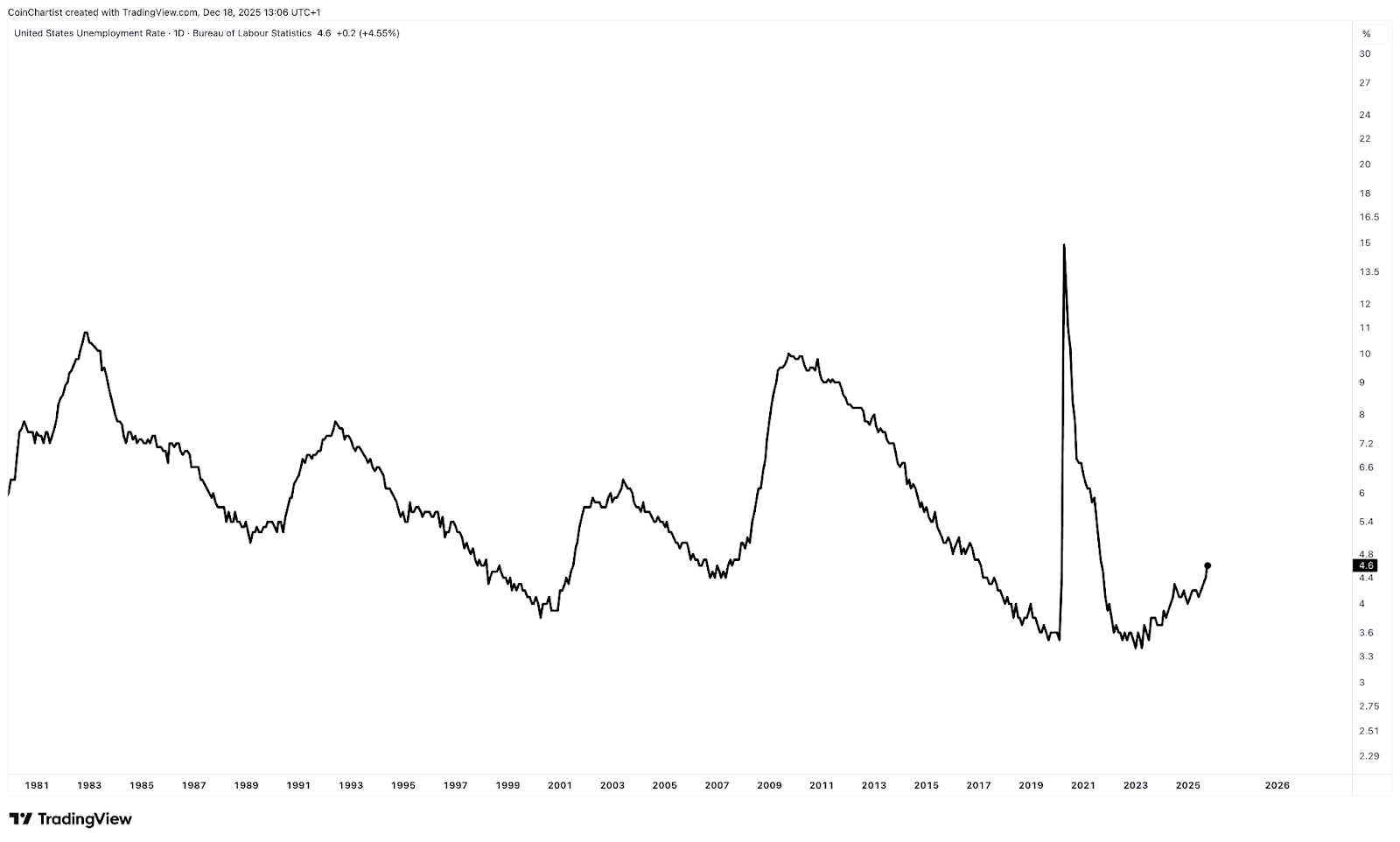
US unemployment rates are a global recession indicator
When easing coincides with signs of slowing economic momentum, it can soften confidence rather than support risk-taking. This uncertainty is amplified by diverging global policy paths, with some central banks easing while others tighten. Such divergence has historically led to higher volatility and range-bound conditions, particularly for assets that rely on strong liquidity inflows.
A Potential Cyclical Bull Trap Is Taking Shape
Bitcoin is currently consolidating after a sharp decline from recent highs. Oversold conditions have helped fuel a rebound, but similar rallies have appeared frequently during previous bear market phases. These counter-trend moves often feel convincing in the moment, especially after aggressive liquidations flush out leverage.
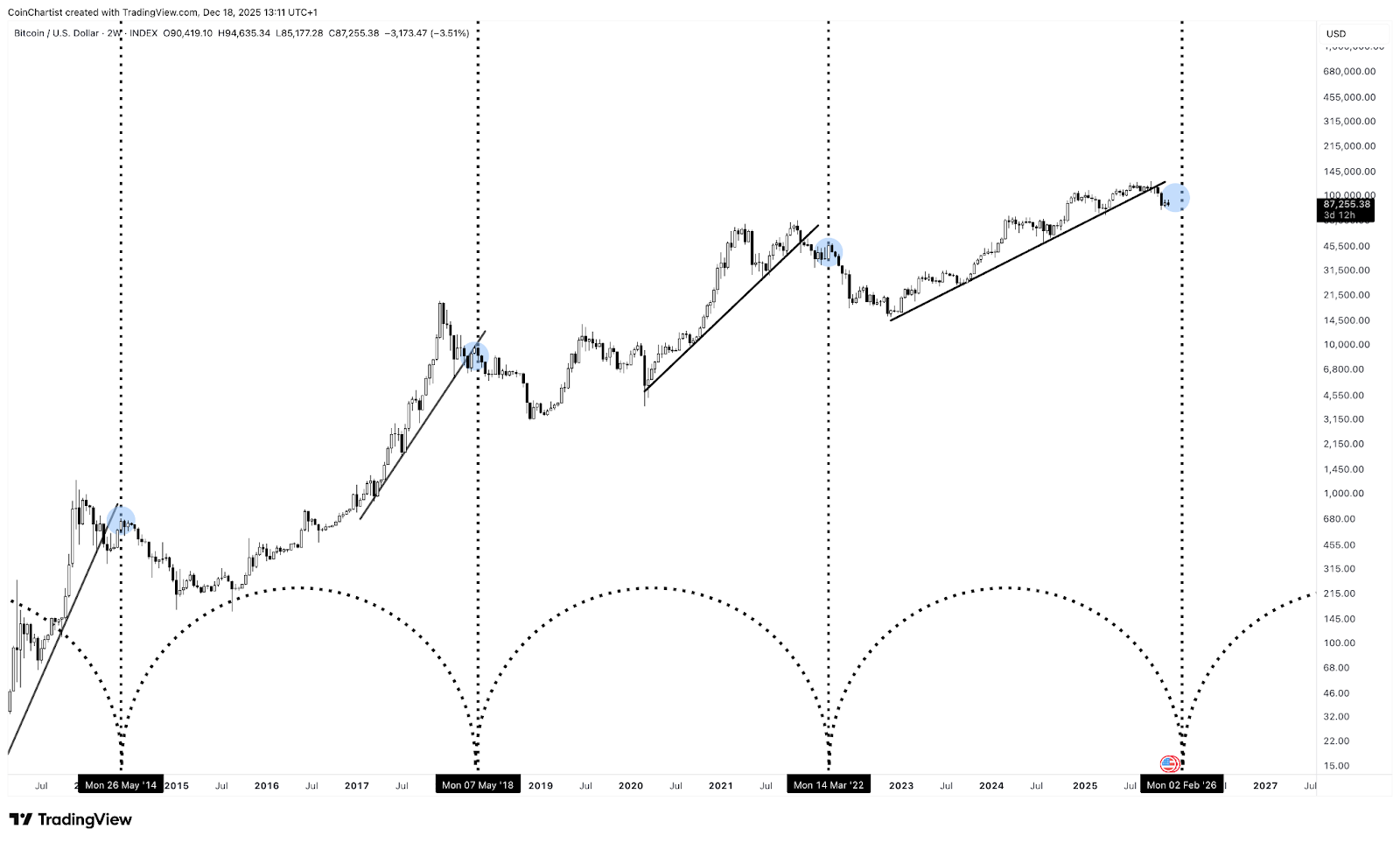
Bitcoin is cyclically due for a bull trap
Historically, early bear markets in Bitcoin have been marked by sharp recoveries that ultimately fail once macro pressure resumes. Without a clear improvement in global liquidity conditions, upside may remain limited. The key risk is confusing short-term relief with a sustained trend reversal. $100,000 will remain a crucial level for confirmation of continuation or an area of possible rejection. Rejection would imply new lows ahead.
Altcoins — Head and Shoulders Pattern Signals Risk Aversion
Altcoins continue to send a more cautious signal. Across many large-cap altcoins and sector indices, head and shoulders patterns are emerging — a structure commonly associated with distribution rather than accumulation.
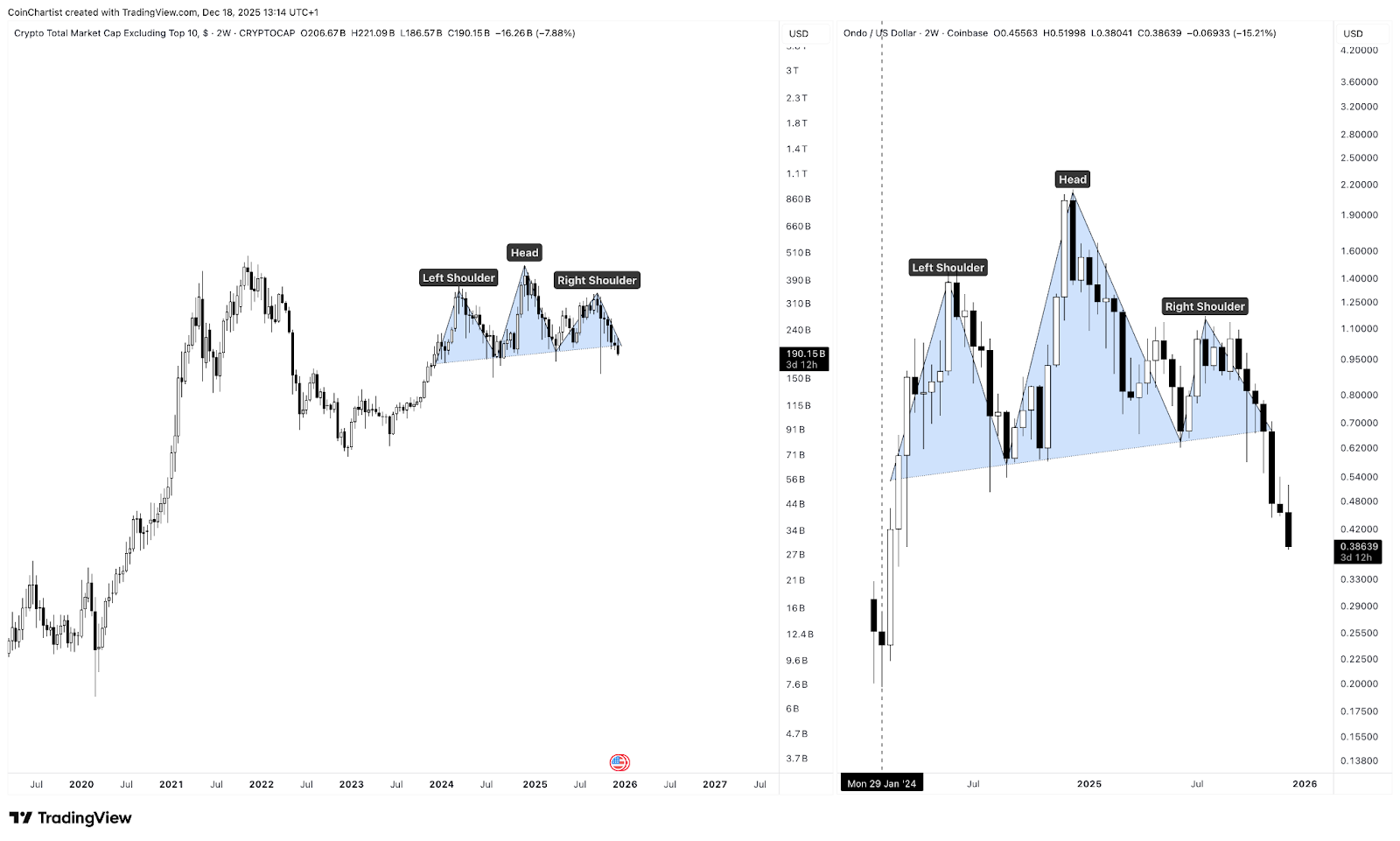
OTHERS (altcoins) compared to ONDOUSD hints at a breakdown
This technical behavior reflects capital pulling back from speculative risk. Even during Bitcoin’s stabilization, altcoins have struggled to confirm strength, suggesting that broader risk appetite remains constrained. Historically, durable crypto recoveries are accompanied by broad participation, and its absence points to continued fragility across the market.
A Defining Moment — Crypto Moves From Speculation to Infrastructure
Beyond short-term price action, an important narrative shift is taking place. US President Donald Trump has publicly stated that the financial system will be upgraded using crypto and blockchain technology, signaling growing acceptance of digital assets as core financial infrastructure rather than fringe speculation.
Regardless of political context, this framing marks a significant moment for the industry. For global markets — particularly here in the EU, where regulatory clarity through frameworks like MiCA is already in place — this adds legitimacy and accelerates institutional consideration. The conversation is increasingly moving away from whether crypto belongs in the financial system and toward how it will be integrated.
Conclusion
The past week underscored how deeply crypto has become intertwined with global macro forces. A shift in Japanese monetary policy, softening labor data, and contracting liquidity have all contributed to a more cautious environment for risk assets. At the same time, price stabilization in Bitcoin and continued weakness across altcoins suggest the market is still searching for direction rather than confirming recovery.
Yet beneath the near-term volatility, a larger transition is underway. As policymakers increasingly frame crypto as financial infrastructure rather than speculation, the long-term trajectory of the industry is becoming clearer — even as short-term conditions remain challenging. For investors, this creates a rare moment where macro pressure and structural opportunity coexist. How the market navigates this tension will likely define the next phase of crypto’s evolution.

Suggested Posts





YouHodler is regulated in Switzerland, the EU and Argentina.

YouHodler SA
Registered financial intermediary

YouHodler Italy S.R.L.
Registered as a VASP with the OAM

YouHodler SA
Registered as VASP with Banco de España

YouHodler SA Branch in Argentina.
Registered as a VASP with the CNV.